
Rome
Italy
Travel | September 2025
“Ciao…
…benvenuti nella città che fu la grande capitale dell’Impero Romano“.
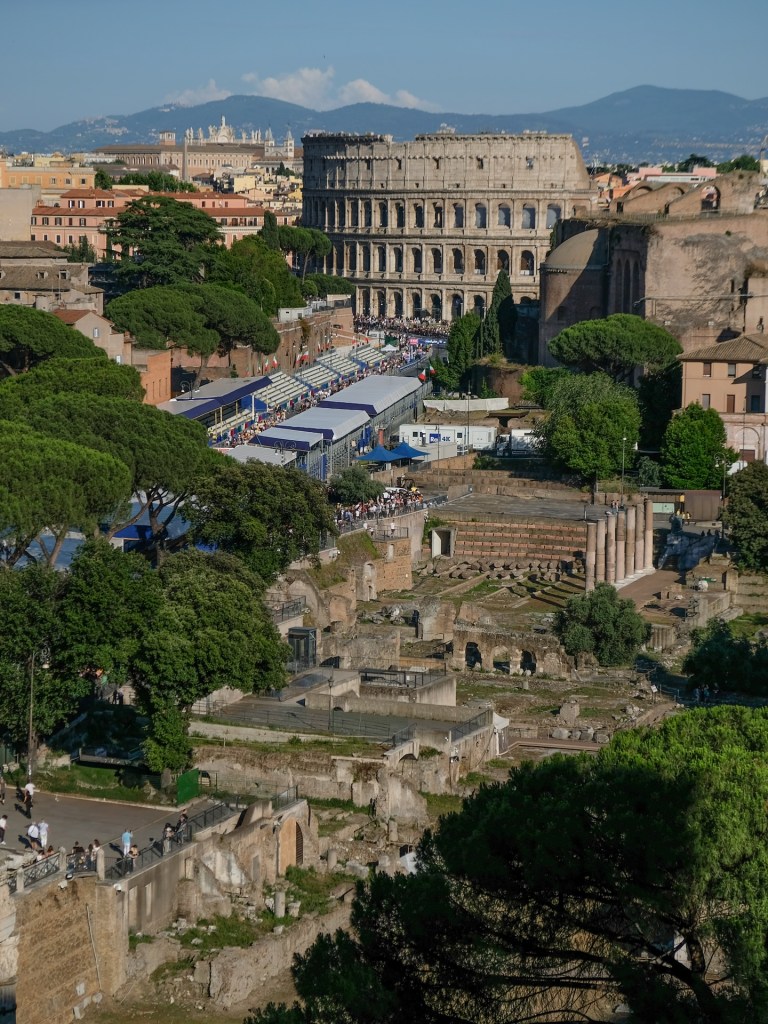
Rome fiercely claims its place as one of the most magnificent and ancient cities in existence. With a tumultuous history spanning over 2500 years, it has indisputably been a battleground of power, politics, culture, and relentless ambition since day one. The origins of this city are tangled in wild legends and gripping mythology, with countless dramatic tales of its creation. Mighty emperors and arrogant Caesars have ruled over this colossal metropolis, the very heart from which the formidable Roman Empire thundered to life.
As the years rolled on, the city became a canvas for stunning monuments, opulent palaces, and revered religious buildings, now serving not only as tourist magnets but also as stark reminders of the city’s grand, yet tumultuous, history. Rome doesn’t just sit idly by; it fiercely asserts itself as a top contender among Europe’s tourist hotspots. With iconic landmarks like the Colosseum and the Vatican, it begs the question: how can anyone resist the allure of such a breathtaking, yet complicated, legacy?
Some Basic Information
ℹ️ Travel: I flew into Rome Fiumicino airport. Trains from the airport directly into Rome City Centre (Termini Station) on the Leonardo Express are frequent, reliable, quick and cheap. A single adult fare costs €15 (GBP£13/US$17) which takes around 35 minutes.
For up-to-date information on the new 2025/2026 EU entry/exit system visit this link.
Rome’s Metro (Underground) System is one of the easiest I have ever used. It literally has three lines aptly named ‘Line A (Red line – Connects areas like the Spanish Steps and the Vatican to Termini station), Line B (Blue Line – the Colosseum, Circus Maximus, and Tiburtina, and is a main line for airport transfers)’, and Line C (Green airport line). The fares for the Metro vary depending on how you use the system. The system uses tap-and-go at the turnstiles with your bank card. The system charges a maximum of €7 per day.
ℹ️ CURRENCY: Italy uses the Euro € . Italy is a member of the EU (European Union)
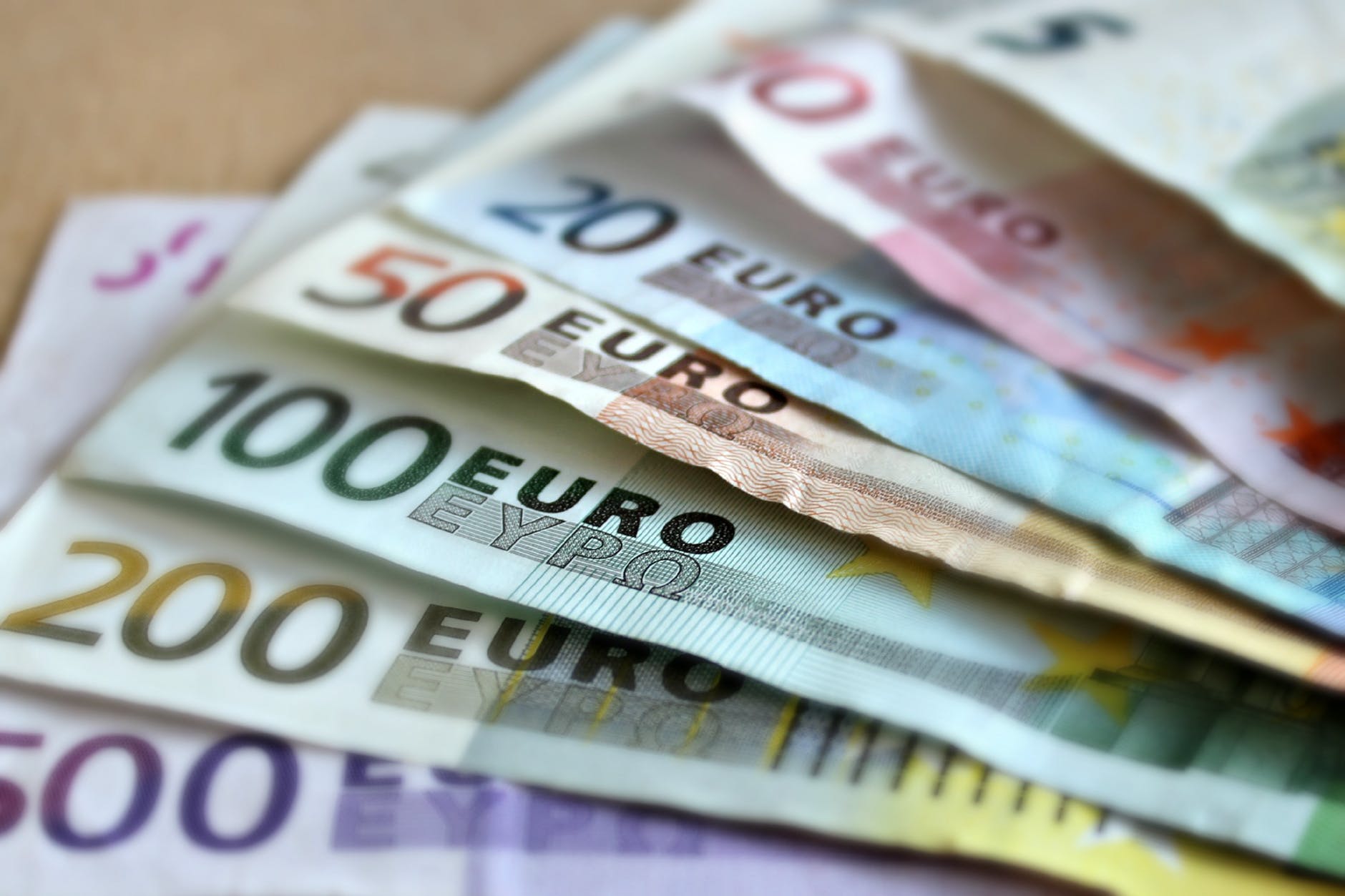
ℹ️ CREDIT CARDS AND BANKS: ATMs are common place across the city. You will have no difficulties using your bankers card in cafes, restaurants and shops. The vast majority of market stall street sellers only accept cash.
ℹ️ WEATHER: Italy has a typically Mediterranean climate. The Summer months are hot and dry but Winter months can be very cold with often flurries of snow.
ℹ️ ACCOMMODATION: The hotel I stayed in for the three days was literally 700 metres from the train station. Hotel Valle is a small 3* boutique hotel that offered a basic Continental breakfast, albeit quite a cramped affair.
WHAT CAN ROME OFFER?
My trip to Rome was a whirlwind of only three days, where I had to meticulously orchestrate my every move. There’s an overwhelming abundance of sights and experiences waiting to be devoured in Rome. I practically annihilated my shoes from the relentless exploration! Here’s a daring itinerary to ensure you pack as many iconic sites into your visit as humanly possible.
DAY 1 – The Colosseum, The Roman Forum and the Piazza Venezia
By the time I had checked into the hotel and found my bearings within the city it was mid-afternoon leaving plenty of time to start sightseeing the Colosseum and the Piazza Venezia.
Thanks to the great location of the hotel located on Cavour Street I managed to walk to the Arena within 10 minutes, but if your hotel is not too close then jump on the Metro ‘Line B’ (Blue line) to Colosseo Station.
The area is a bustling tourist magnet where relentless market traders peddle their overhyped paintings and sketches of the Colosseum; aggressive Gladiators are practically begging for your selfie, and overly enthusiastic tour guides are desperate to snatch your attention and squeeze every last Euro from your pocket.
The Colosseum
Rome’s great gladiatorial arena is the most thrilling of the city’s ancient sights. Inaugurated in AD 80, the 50,000-seat Colosseum was originally known as the Flavian Amphitheatre. The outer walls have three levels of arches, framed by decorative columns. They were originally covered in travertine and marble statues filled the niches on the 2nd and 3rd storeys. The upper level, punctuated with windows and slender Corinthian pilasters, had supports for the masts that held the awning over the arena, shielding the spectators from sun and rain.
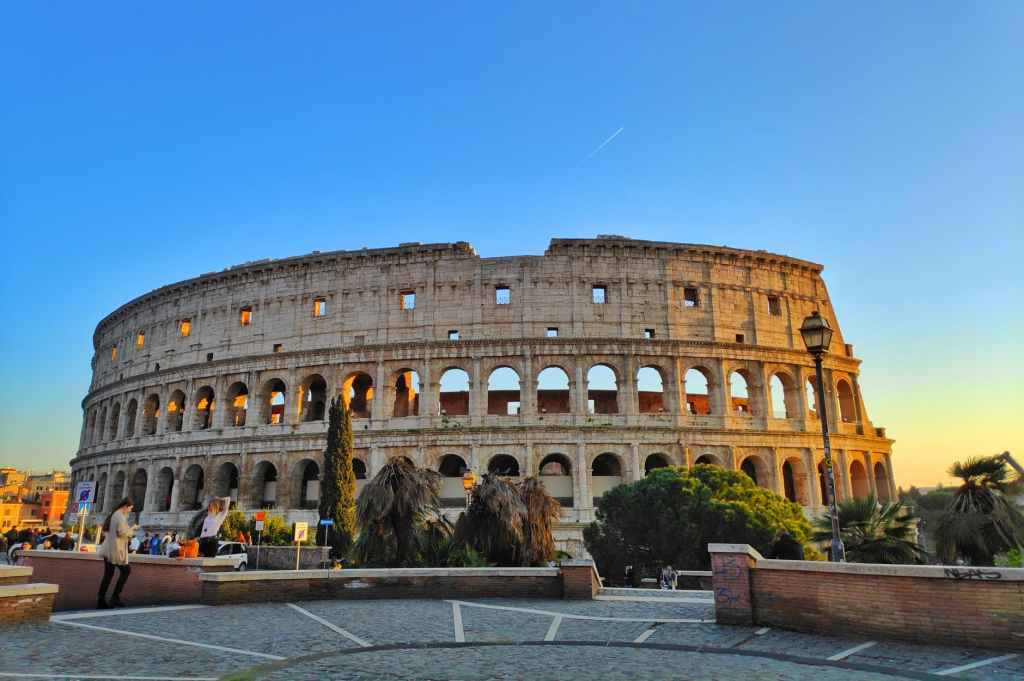
The 80 entrance arches, known as vomitoria, allowed the spectators to enter and be seated in a matter of minutes. The Colosseum’s interior was divided into three parts: the arena, cavea and podium. The arena had a wooden floor covered in sand to prevent the combatants from slipping and to soak up the blood. Trapdoors led down to the underground chambers and passageways beneath the arena floor – the hypogeum. Animals in cages and sets for the various battles were hoisted up to the arena by a complicated system of pulleys.
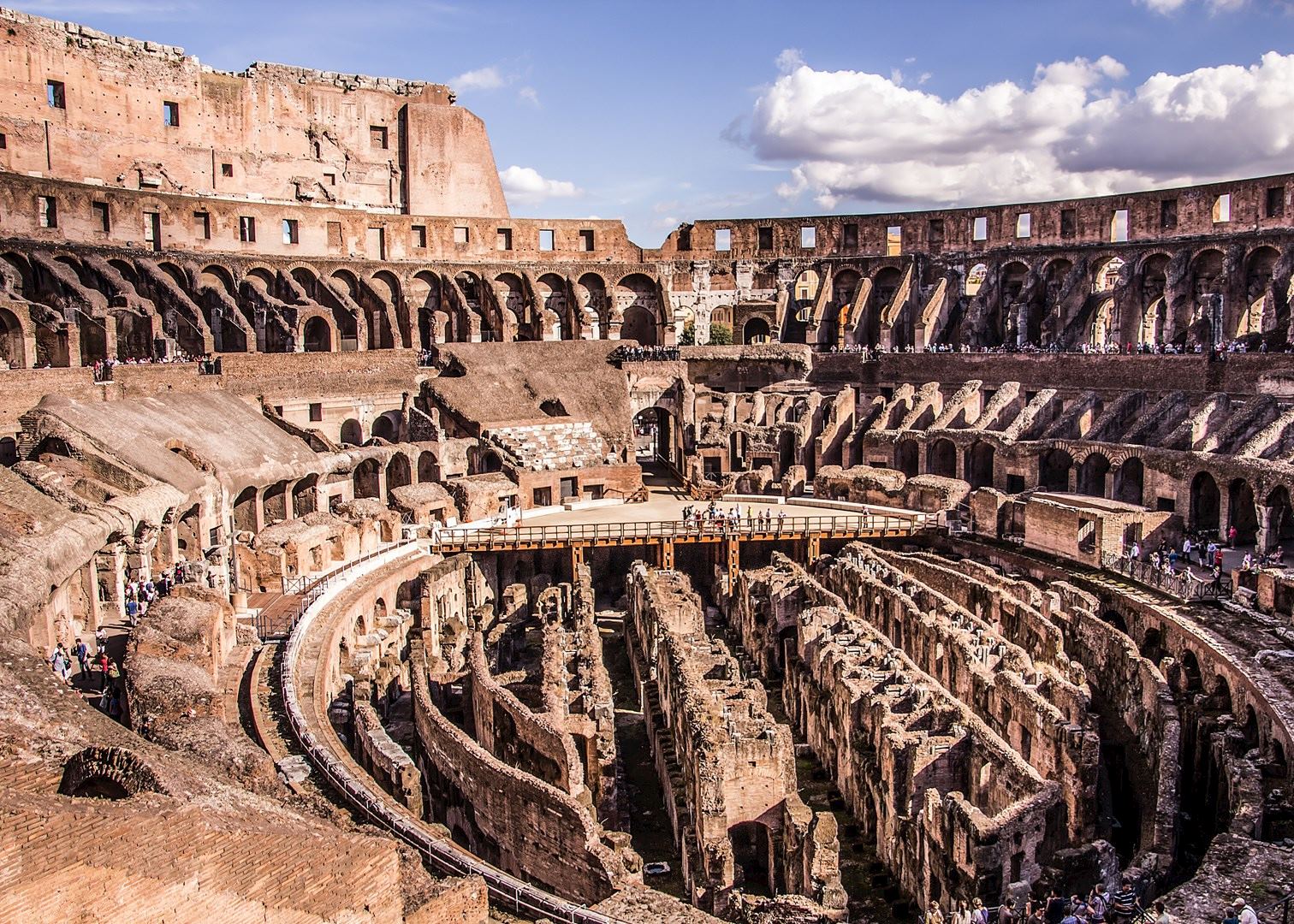
The cavea, for spectator seating, was divided into three tiers: magistrates and senior officials sat in the lowest tier, wealthy citizens in the middle and the plebs in the highest tier. Women were relegated to the cheapest sections at the top. The podium, a broad terrace in front of the tiers of seats, was reserved for emperors, senators and VIPs.
You can take a self-tour of the Arena but for €18 (GB£16/US$21) you can take a tour guide which lasts around an hour as they explain the history of the Colosseum. It’s well worth the money and I certainly got more from the visit. Use the official Colosseum website for details.
The Roman Forum
Possibly one of the most important Roman ruins in Italy, the Roman Forum is an ancient site that consists of many ruins that were once the centre of Roman public and political life. Various temples, squares and arches stood here including the temples of Saturn, Titus and Vesta and the Arch of Severus.
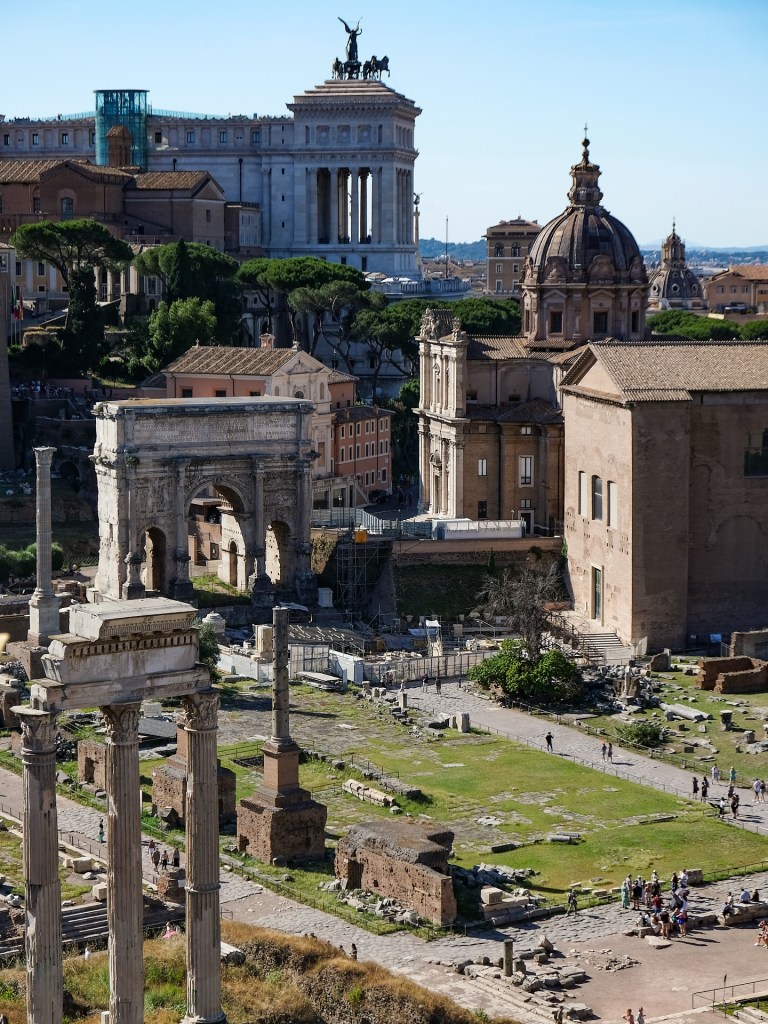
Much of these structures still stands today and you can still see some of the arches and building foundations and walls. Located next to the Colosseum and Altar of the Fatherland, the Roman Forum really is an important site for your consideration.
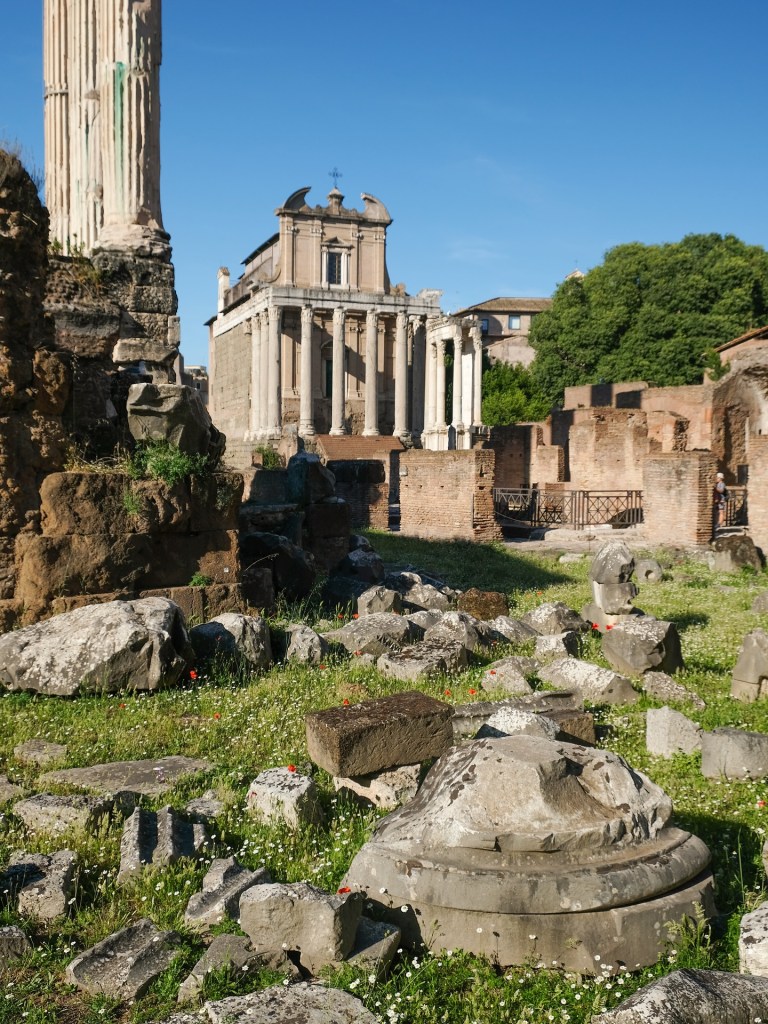
Tickets can be bought for entry to both the Forum and the Colosseum and it is advised to allow ample time to properly explore the ruins and learn about the history of this place.
Piazza Venezia
Made from white marble and two proud Italian flags at full mast decorated by two chariot statues of Julius Caesar the building is the central hub of Rome, Italy, in which several thoroughfares intersect. It takes its name from the Palazzo Venezia, built by the Venetian Cardinal, Pietro Barbo (later Pope Paul II) alongside the church of Saint Mark, the patron saint of Venice.
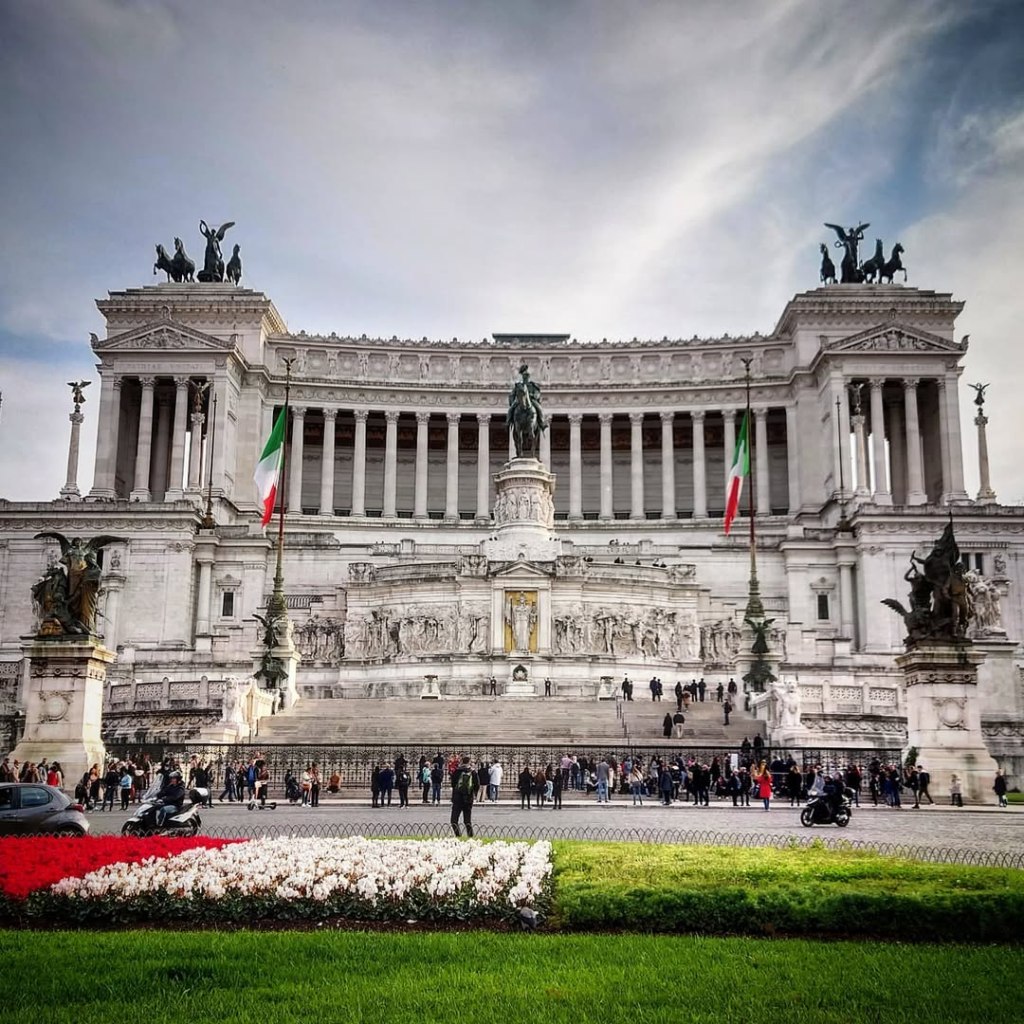
The Palazzo Venezia served as the embassy of the Republic of Venice in Rome. One side of the Piazza is the site of Italy’s Tomb of the Unknown Soldier in the Altare della Patria, part of the imposing Monument to Vittorio Emanuele II, first king of Italy.
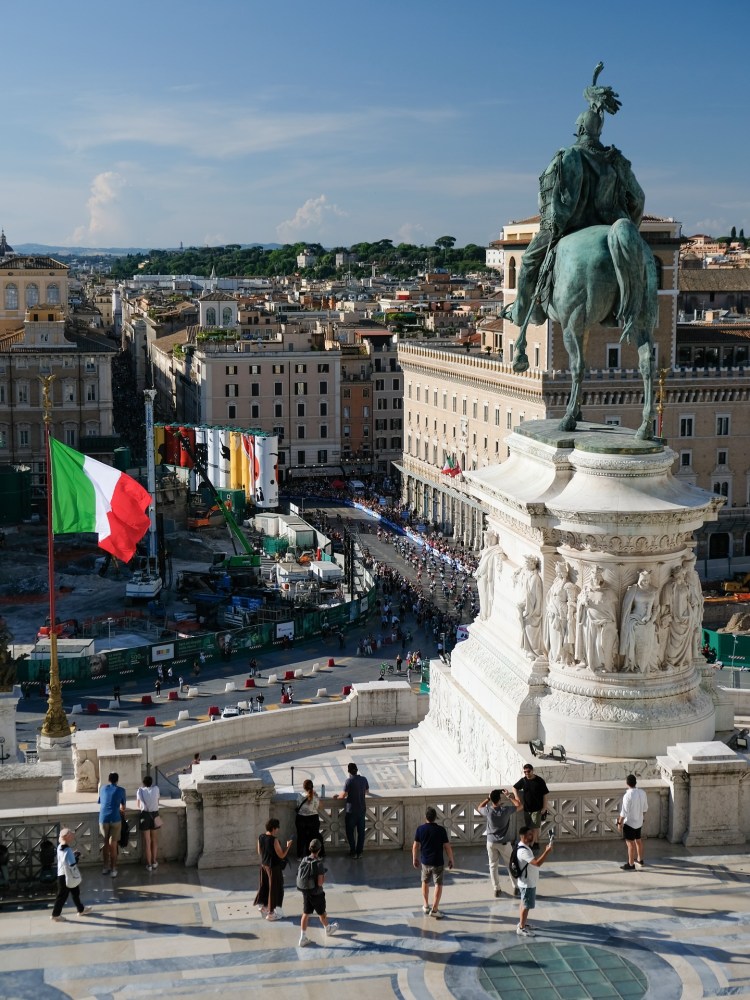
You can walk up the steps and inside the Building. It’s free to enter. Here you will be rewarded with panoramic views over Rome, and if after all this walking your feet begin to tire, there is a small bistro at the top which offer surprisingly reasonable priced food and beverages.
DAY TWO – The Vatican City, Trevi Fountain and Piazza di Spagna (Spanish Steps)
After a lavish breakfast that could fuel an expedition, I laced up my walking shoes, ready to conquer the day at The Vatican City and its tantalizing surroundings. Strutting the 700 meters to Termini train station, I descended into the depths of the Metro system, eager for the adventure that awaited.
Take ‘Line A’ (red line) to ‘Ottaviano – Saint Pietro’ station. Just look for the Vatican City signs, but honestly, the throngs of tourists marching in unison toward the same destination will basically drag you there—no thinking required.
The Vatican City
The Vatican is a walled enclave within the city of Rome. With an area of approximately 44 hectares, and a population of 842 it is the smallest internationally recognised independent state in the world by both area and population. It is sacerdotal-monarchical state ruled by the Bishop of Rome – the Pope. The highest state functionaries are all Catholic clergy of various national origins.
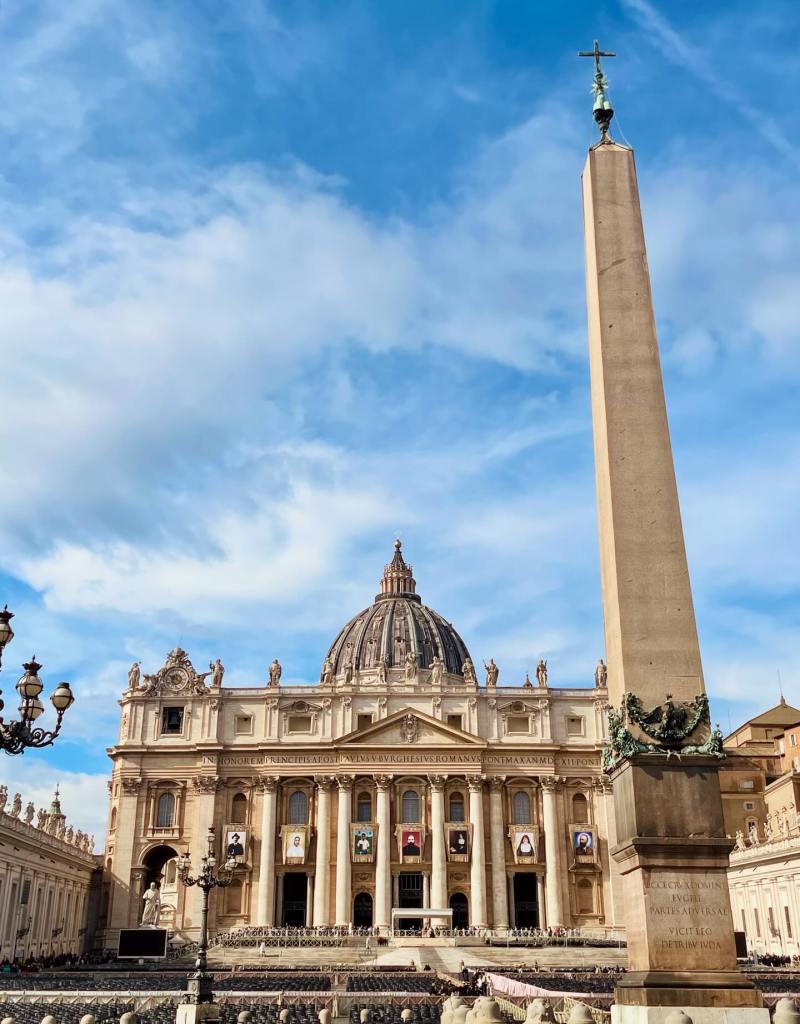
Within Vatican City are cultural sites such as St. Peter’s Basilica, the Sistine Chapel and the Vatican Museums. They feature some of the world’s most famous paintings and sculptures. The unique economy of Vatican City is supported financially by the sale of postage stamps and tourist mementos, fees for admission to museums, and the sale of publications.
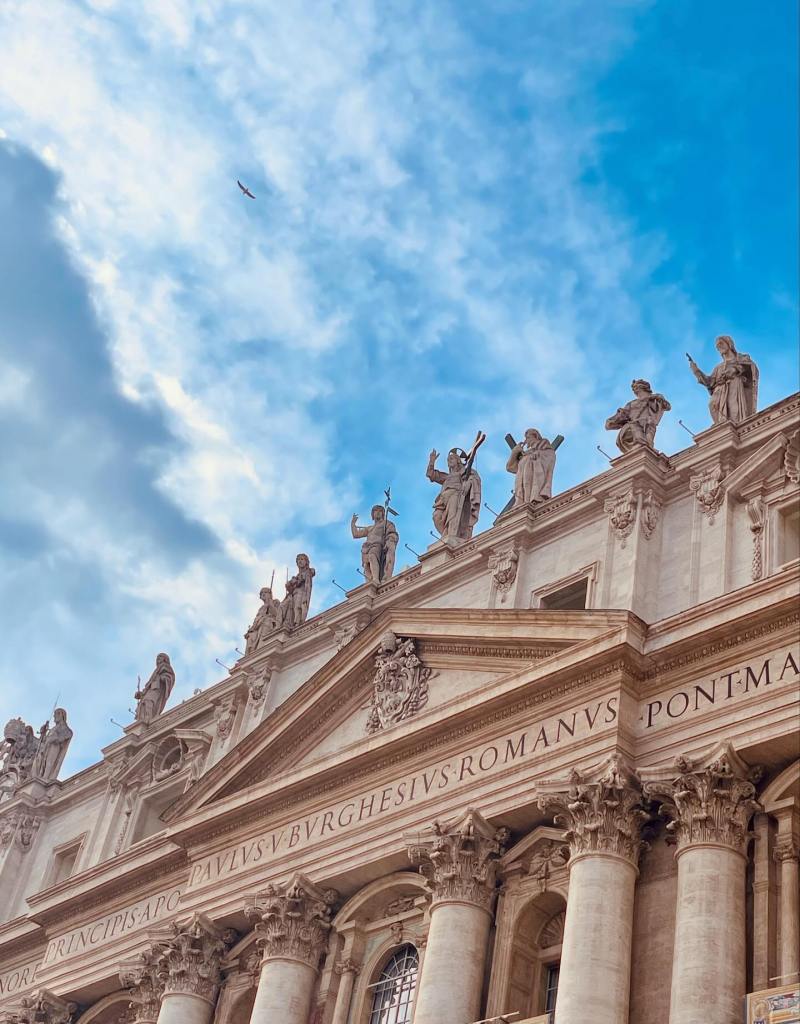
There are ticket touts everywhere all trying to compete for your business. To enter the Vatican itself and St. Peters Brasilica (Square) is free. If you are wanting to visit the Vatican Museum and the Sistine Chapel you will need to purchase these tickets. In my opinion they are expensive at €30 each, however, it remains cheaper than purchasing on the door itself. The one ticket allows entry to all the museums – please bare in mind that the queues for these venues are extensive, AND, last entry for the Sistine Chapel is 1600.
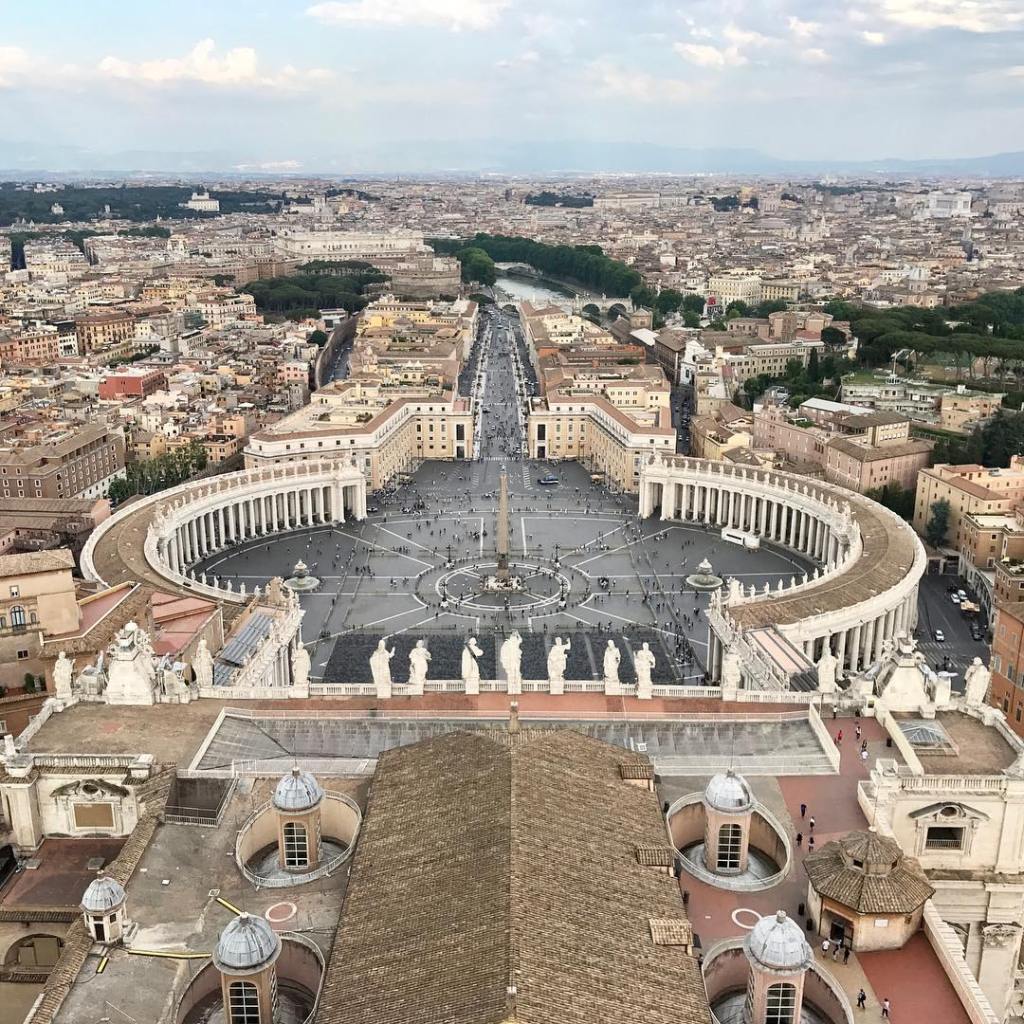
To enter St Peters Brasilica you will need to queue. Having said that you do not wait to purchase tickets to enter the building but in order to pass through airport style security – once through you are at liberty to wonder. The queue only took 25 minutes to process so it always appears more daunting than it actually is St. Peters Brasilica is unbelievably beautiful and the sense of wealth and power within the Roman Catholic faith is over-powering!! Inside ornate decorated ceilings, statues and side rooms are all stunning! Even if you find your feet tire from all the walking spend €8 each to use the elevator to bypass walking up several flights of stairs, nonetheless, you are still required to walk the remaining 320 steps to the top after the elevator. You will fall silent at the stunning panoramic views across The Vatican itself and outer lying Rome city once at the top!
The Vatican additionally offered one more ‘unplanned’ sight and was only available to the lucky few as people watched ‘A’ lister Hollywood actor Morgan Freeman filming; who posed for some photographs too!
Piazza di Spagna (Spanish Steps)
One of my pet hates is back-tracking and fortunately in order to get back to Termini Train station, and my hotel, I have to pass this area on the Metro so the idea was to stop off here after visiting The Vatican.
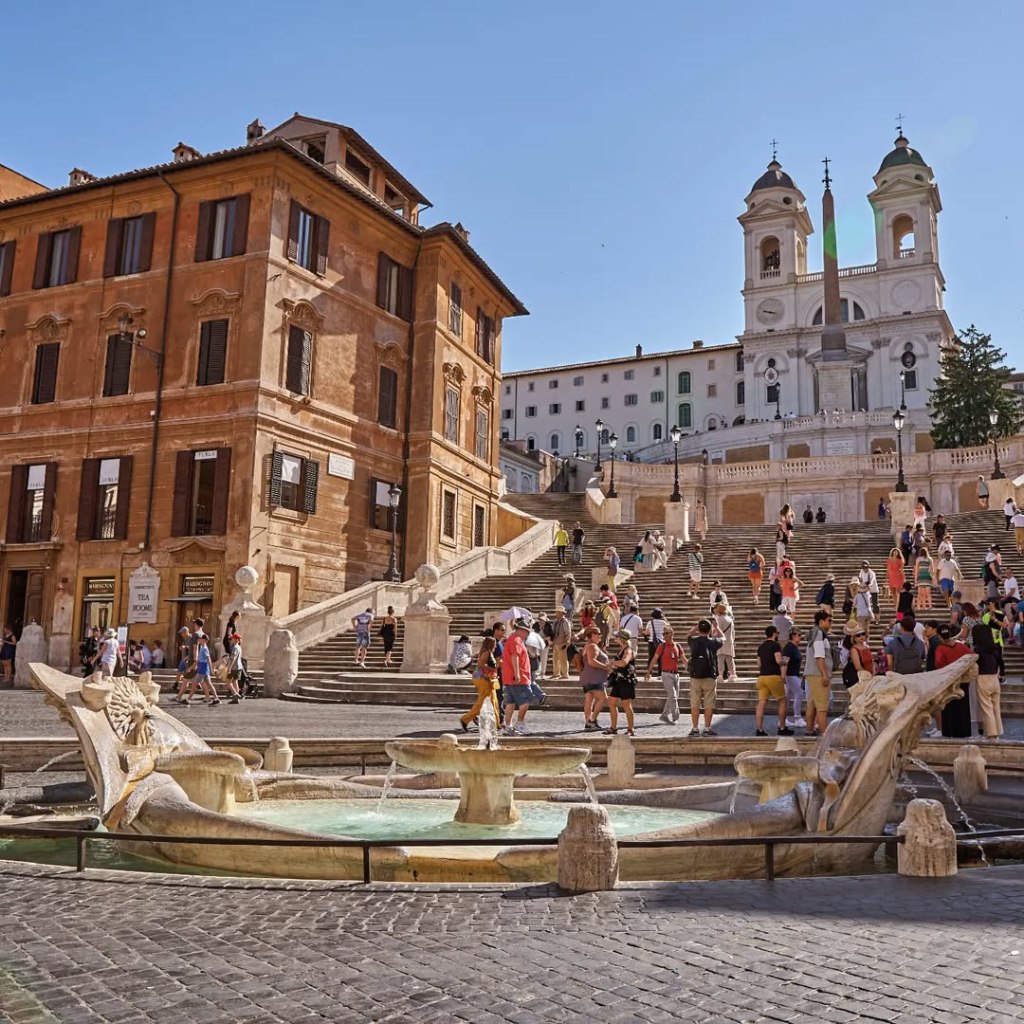
Catch the Metro (Red Line A) to ‘Spagna’ station, and prepare to be immersed in the pulsating heart of the Piazza and The Spanish Steps, where the chaos of tourists and the allure of history collide in an unforgettable spectacle.
The area flaunts its exclusive vibe, where you can indulge in all the upscale high street and premium brand shops that scream luxury. The Spanish Steps, ironically named after the Spanish Embassy to the Holy See, are a masterpiece of Italian design by Francesco de Sanctis, constructed in 1725 with French funds, leading you straight to the French Chiesa della Trinità dei Monti—quite the juxtaposition, wouldn’t you say?
This landmark church, which was commissioned by King Louis XII of France and consecrated in 1585, commands memorable views and boasts some wonderful frescoes by Daniele da Volterra.
The Trevi Fountain
The Trevi Fountain is an audacious spectacle, flaunting its mythical figures and untamed horses in a grand display of artistic excess. It unapologetically dominates the entire facade of the 17th-century Palazzo Poli.
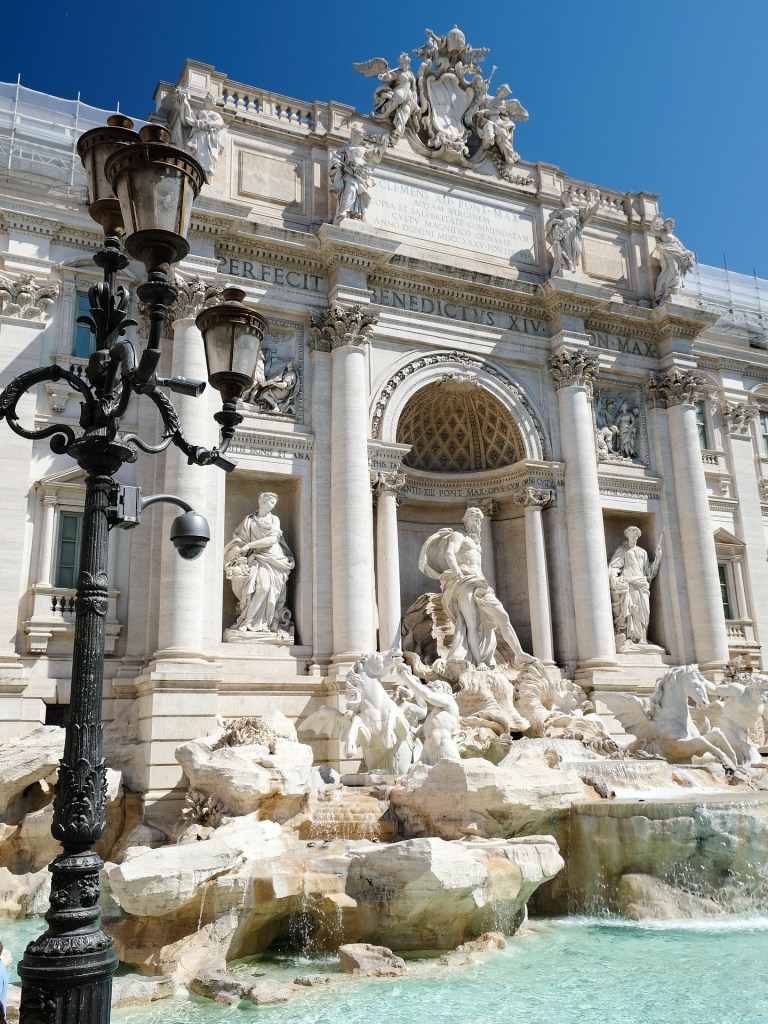
Tossing a coin into the water is the tradition that promises your return to Rome—sure, if you believe in that kind of magic. Designed by the illustrious Nicola Salvi in 1732, the fountain showcases Neptune’s chariot, pulled by Tritons with seahorses—one wild, one docile—symbolising the nature of the sea. Of course, like every corner of Rome, the fountain turns into a chaotic circus during the day. Savvy visitors know to come back in the evening, when you can finally savor its foaming grandeur without the overwhelming crowds ruining the moment.
DAY THREE – Trastevere District
This ancient area of Rome isn’t just a place—it’s a vibrant testament to the raw essence of authentic Roman life, where you can truly immerse yourself in the heartbeat of the city and its inhabitants. Nestled on the west side of the River Tiber, Trastevere boldly claims its status as the 13th district of Rome, overflowing with narrow, cobbled streets that pulse with character and intrigue at every turn.
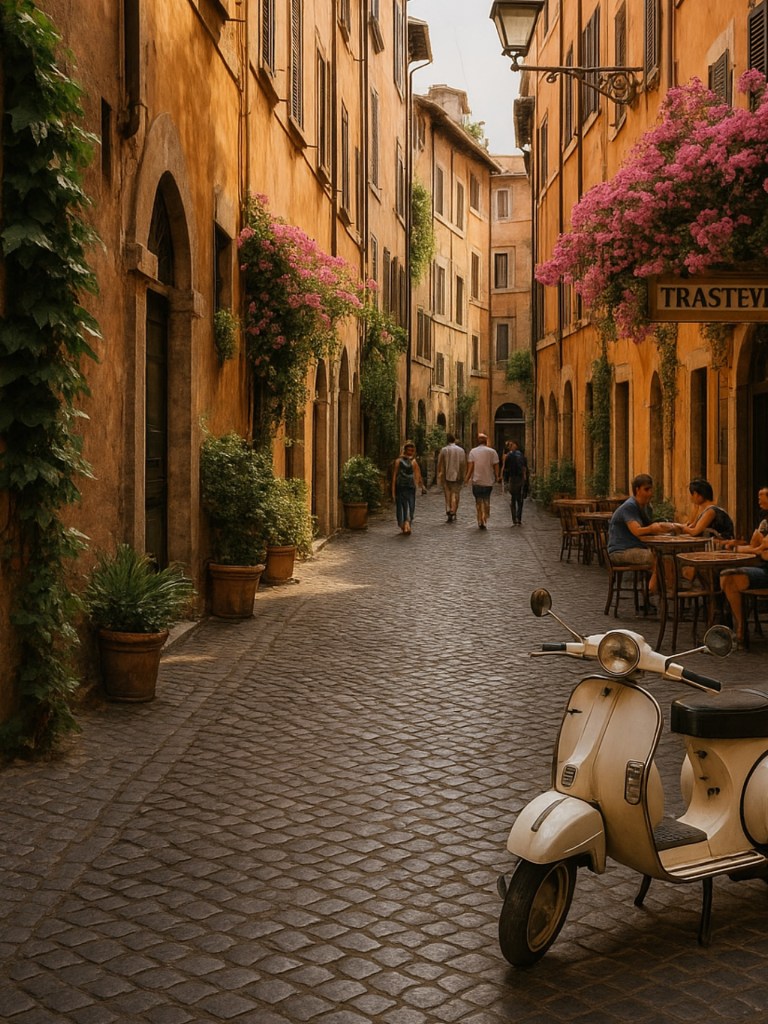
Trastevere is quaint, beautiful, relaxed and cheap compared to the rest of Rome. Ancient houses line the winding streets and many pubs, restaurants, cafes and bars can be found here too. It is not uncommon to see washing hanging out between the streets and for the locals to be shouting to each other from building to building. This is Rome at its most unabashed and simplistic form.
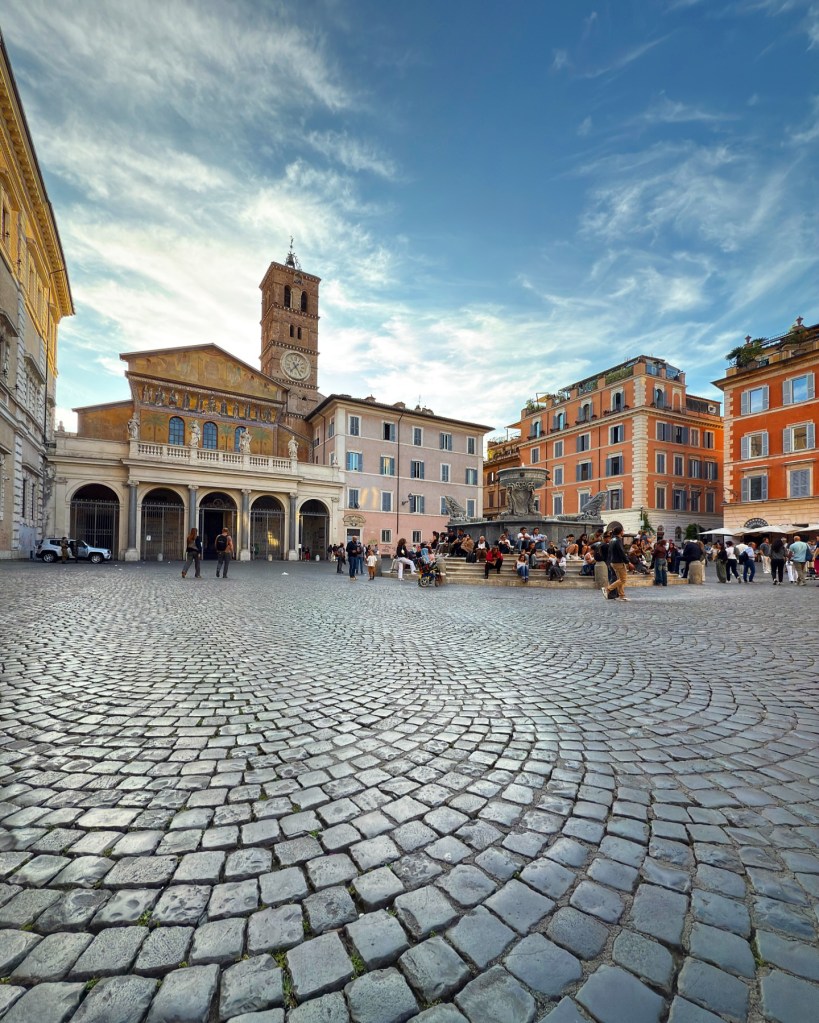
Trastevere I found was not the easiest area to get to. Located on the South side of the River Tiber and really is too far to walk especially after the previous two days.
You can hail a cab at the cost of €18 to ‘Piazza Santa Maria’ (above) which is a beautiful little square rimmed with restaurants and a church, or like myself, caught the Metro Line B to Piramide station (aptly named as there is a pyramid monument outside the station), then walk 10 minutes over the river.
La Prosciutteria Trastevere – Eat Here!
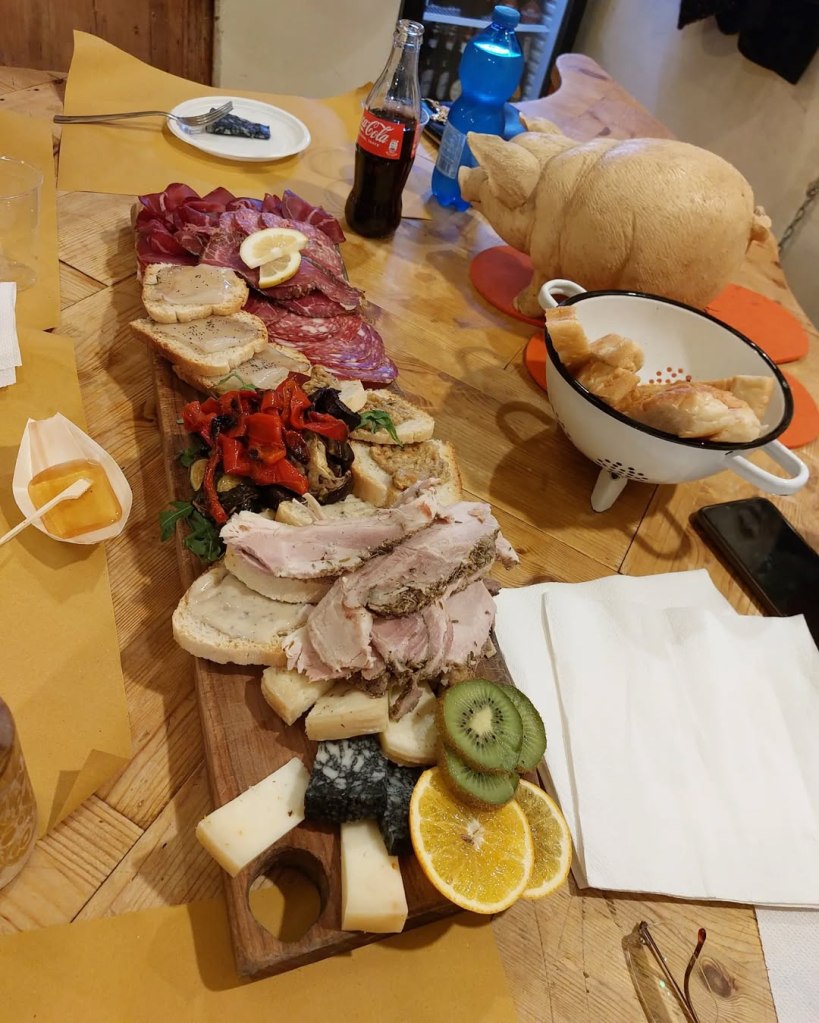
This isn’t just my favourite spot; it’s an absolute gem that demands attention! It’s been ages since I’ve dined somewhere and felt excited to fork over my cash. This place transcends being merely an eatery; it’s a full-blown culinary extravaganza that tantalises your senses with unforgettable sights, intoxicating smells, and explosive flavours.
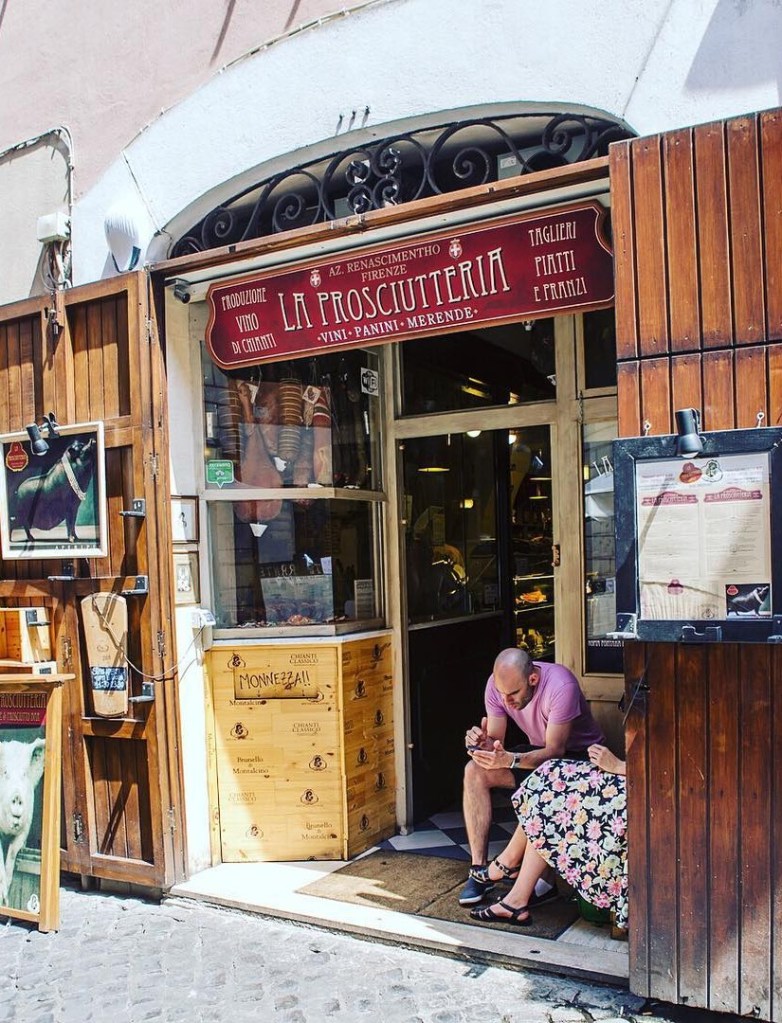
The premise oozes character, enticing sensations, and a smorgasbord of culinary delights as you feast your eyes on the magnificent meats and cheeses being sliced before you. Imagine large, succulent slabs of meat hanging from the ceiling, allured by lavender, while the walls boast a cheeky display of wine bottles, soft drinks, and captivating pictures. And why not indulge yourself by snagging some edgy branded T-shirts or, like me, treat yourself to a pair of beautifully etched wine glasses?
Casetta Di Trastevere -casettaditrastevere.it/en/
Located in ‘Piazza De Renzi‘ is a charming little bistro that’s almost too cheap to be true. I whiled away the hours devouring plate after plate, accompanied by an indulgent flow of Prosecco, all while eavesdropping on the colorful symphony of passersby. To my delight, the final bill was a mere whisper against my wallet, leaving me grinning from ear to ear. The staff? Oh, they’re not just friendly; they’re the kind of attentive that makes you wonder if they can read your mind.

You must experience Trastevere and dive into an intoxicating blend of culture that will leave you wanting more; hit the streets after dark and lose yourself in the electric pulse of its vibrant nightlife.
Other Links: Europe Homepage |Destinations Homepage | Main Homepage
 theresafrogontheporch.com