

Riga
Latvia
Travel | Updated September 2024
Riga, the bold capital of Latvia, once a part of the Soviet Union, stands defiantly on the far eastern edge of Europe. This tiny nation is unapologetically wedged between its northern neighbour, Estonia, and Lithuania to the south, while the remnants of its ex-motherland, Russia, looms threateningly to the east.
Riga is vibrant cosmopolitan city and is the largest of all three Baltic capitals.
Riga, the unapologetically vibrant capital of Latvia flaunts its cultural prowess with museums and concert halls that pulse with energy, all wrapped up in stunning wooden buildings and the alluring charm of its medieval Old Town mixed with art nouveau flair. Nestled on the Baltic Sea at the River Daugava’s edge, this city tempts you into a world of adventurous water activities—from thrilling canal boat tours to the irresistible allure of beach swimming that beckons you to dive in.

History Synopsis
Latvia has had a varied history and has been ruled by several civilisations including German and Polish advances. During the World Wars the country fell under Nazi German rule before losing its grip to the Russian powerhouse. Latvia finally became and independent state as the former USSR broke-down it was one of the countries to break away in 1991.
Some Basic Information
ℹ️ TRAVEL: Riga International airport is the main airport in Latvia and the largest airport out of the Baltic States. The airport is approximately 7 miles (11kms) from Riga.
For up-to-date information on the new 2025/2026 EU entry/exit system visit this link.
ℹ️ AIRPORT TRANSFER: Riga offers two methods to transfer from its airport to the city. The Route 22 bus runs to and from the airport every 10–20 minutes starting from 5:25 in the morning till 00:40 in the night. It takes 30-45 minutes to reach Old Town, with the “11. novembra krastmala” stop located directly across from it. The “Autoosta” stop is near Riga International Bus Station and Riga Central Station. A bus ticket costs € 1.80 (GB£1.50/US$2.00).
A taxi ride from the airport to Riga city centre takes about 15 to 25 minutes, depending on traffic, and costs approximately €10–25 (GB£9.00-GB£22/US$12.00-Uas$29). There are taxi’s waiting outside the airport, or use the BOLT app. Riga’s answer to Uber.
ℹ️ CURRENCY: Latvia uses the Euro (€). Latvia is a member of the EU (European Union).
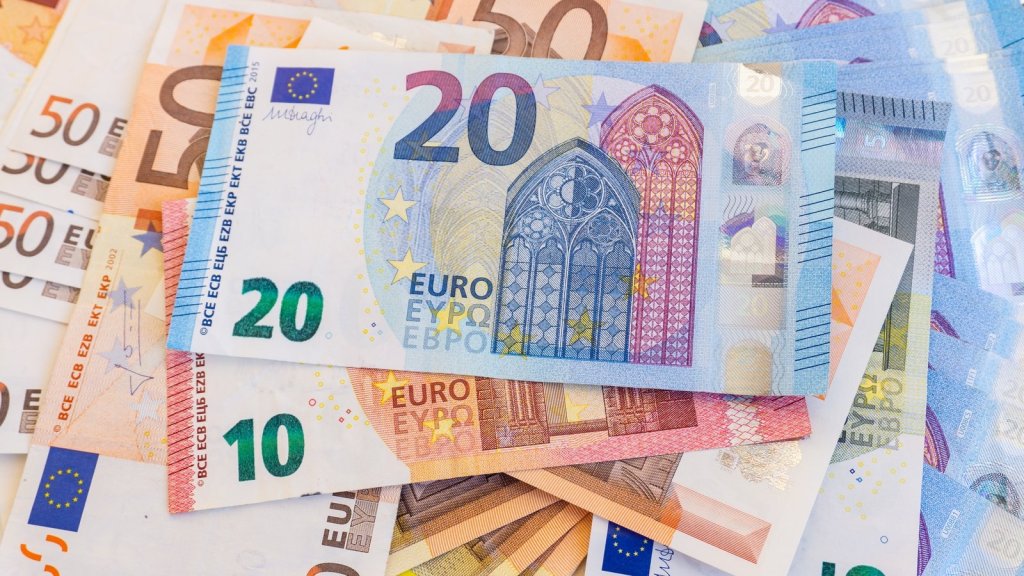
ℹ️ CREDIT CARDS AND BANKS: ATMs are common place across the city. You will have no difficulties using your bankers card in cafes, restaurants and shops. The vast majority of market stall street sellers only accept cash.
ℹ️ WEATHER: Like the majority of Northern Europe the Winter months are damp, grey and very cold. The Continent sheds its Winter cold around March and days become long and warm during the Summer months until around early October.
ℹ️ ACCOMMODATION: Hotels can be a little pricey depending on where you satu within the city. If you’re looking for somewhere easier on the budget but close to the city centre then consider the 4* Welton Riverside and Spa or the 4* Hestai Hotel Draugi

WHAT CAN RIGA OFFER?
RIGA CATHEDRAL
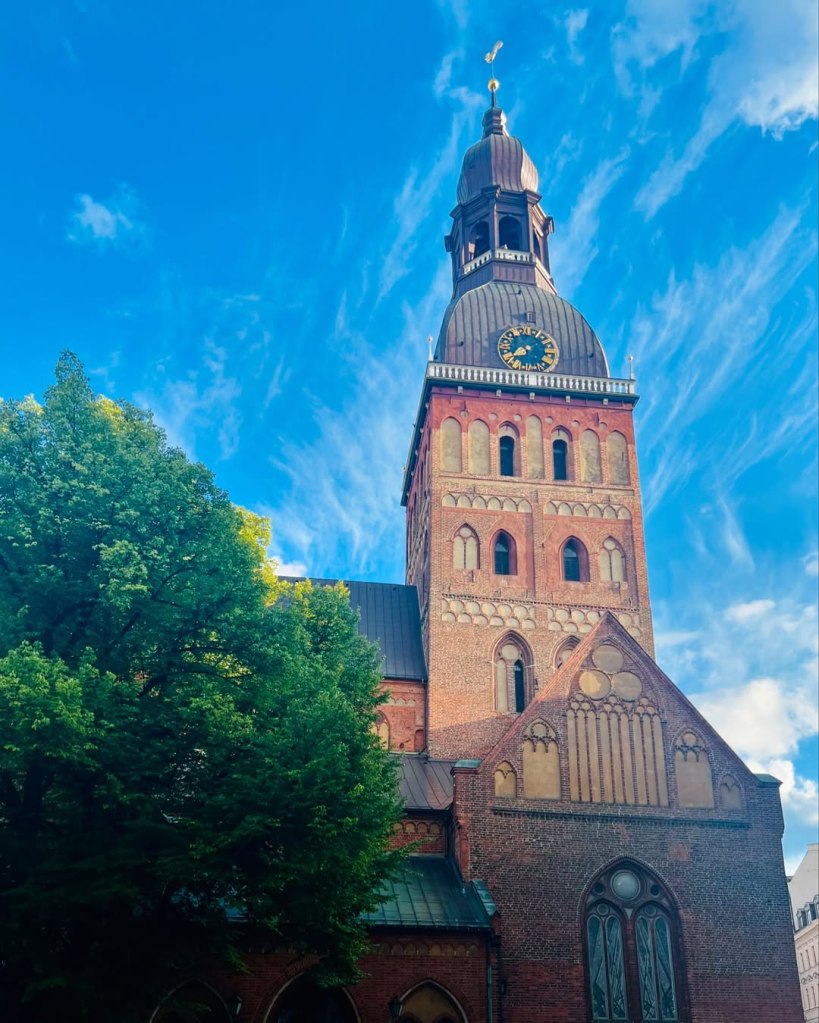
Founded in 1211 this enormous cathedral is the largest medieval church in the Baltic. During Soviet times services were forbidden, but the building, along with its huge pipe organ, built in 1884, underwent a careful reconstruction.
It was used as a classical-music venue, which it very much remains now, although services have been resumed since the Lutheran archbishop of Latvia moved in. The floor and walls of the huge interior are dotted with old stone tombs – note the carved symbols denoting the rank or post of the occupant.
RIGA CENTRAL MARKET
Completed in 1930, Riga’s Central Market was one of the largest and most modern marketplaces on the European continent. When originally built there were five hangers (that were used as Zeppelin hangars during WWI).
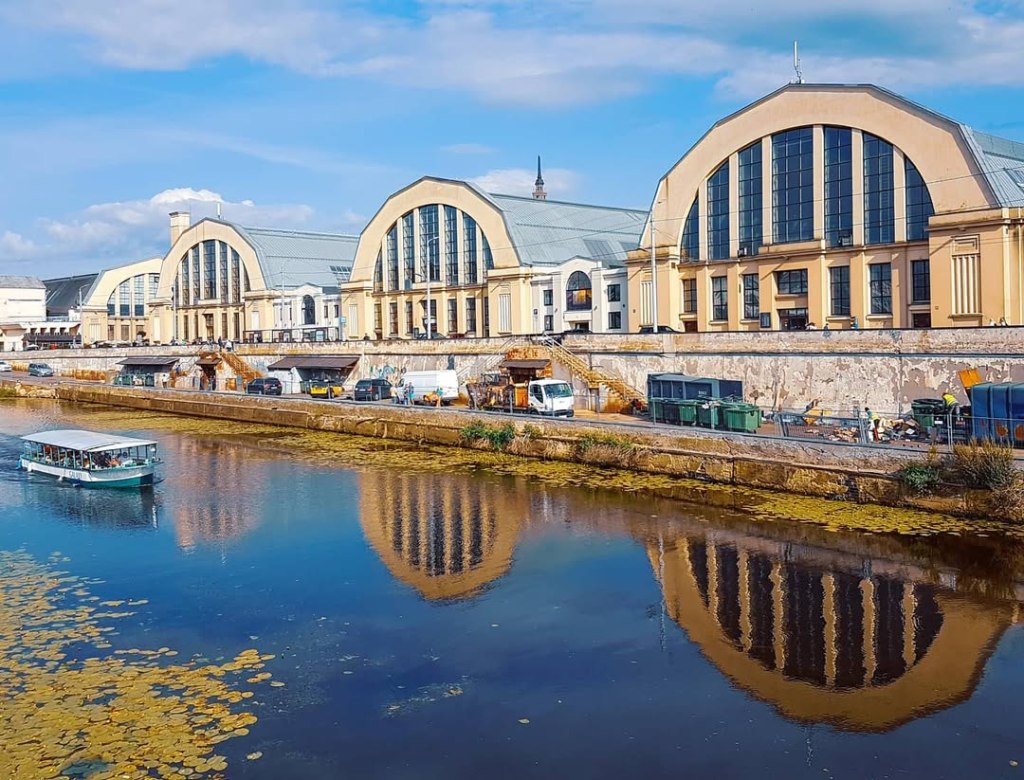
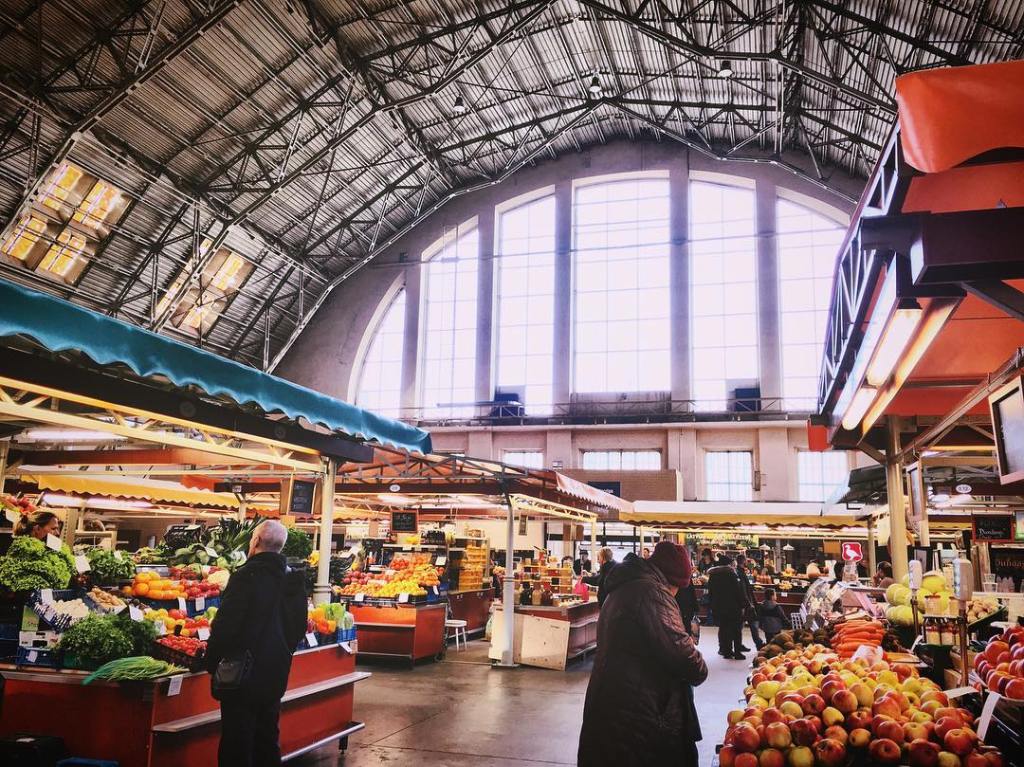
Today there are four remaining hangers in full operation that serve their original function as meat, fish, produce and dairy markets. During busy periods the markets spill out beyond the confines of the hangars and operate throughout the day, some longer than others. Whether it was just timing of my visit but beware of seagulls. Like in most coastal towns and cities there are flocks of them…. I whether you class this a lucky or not had to often make a dash for a hanger as these aerial animals dive-bombed passers by below.
FREEDOM MONUMENT
Riga’s Freedom Monument towers above the city between Old and Central Riga. Paid for by public donations, the monument was erected in 1935 where a statue of Russian ruler Peter the Great once stood.
At the base of the monument there is an inscription that reads ‘Tevzemei un Brivibai’ (For Fatherland and Freedom), accompanied by granite friezes of Latvians singing and fighting for their freedom. Among the figurines, you may recognise that of Lacplesis – the half-man/half-bear who symbolises Latvians’ struggle for independence.
A copper female Liberty tops the soaring monument holding three gold stars in her hands. The three stars represent the three original cultural regions of Latvia: Kurzeme, Vidzeme and Latgale.

HOUSE OF THE BLACKHEADS
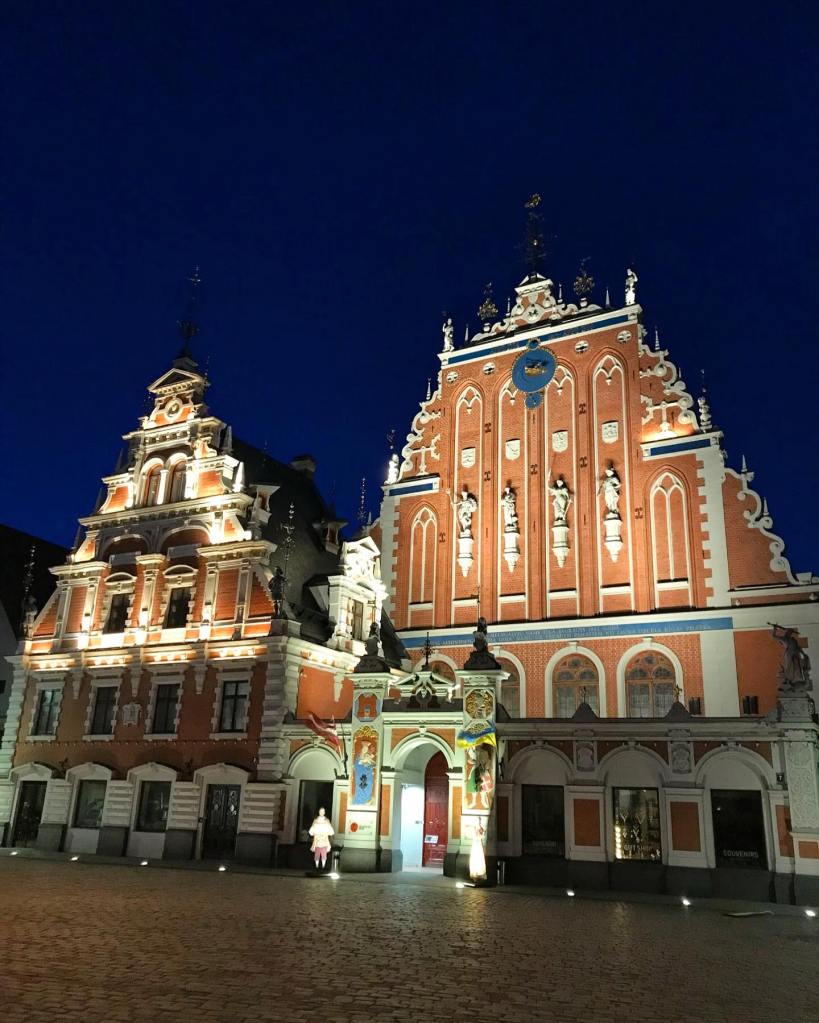
Located in the Town Hall Square. If you were a German merchant and single in the Middle ages you’d have a room here at the House of the Blackheads. This house was built in 1334 for upper class merchants and was used as a venue for meetings and banquets.
The House of the Blackheads to Riga what the Eiffel Tower is to Paris, so make sure to put it at the top of your list.
BASTEJKALNA PARK
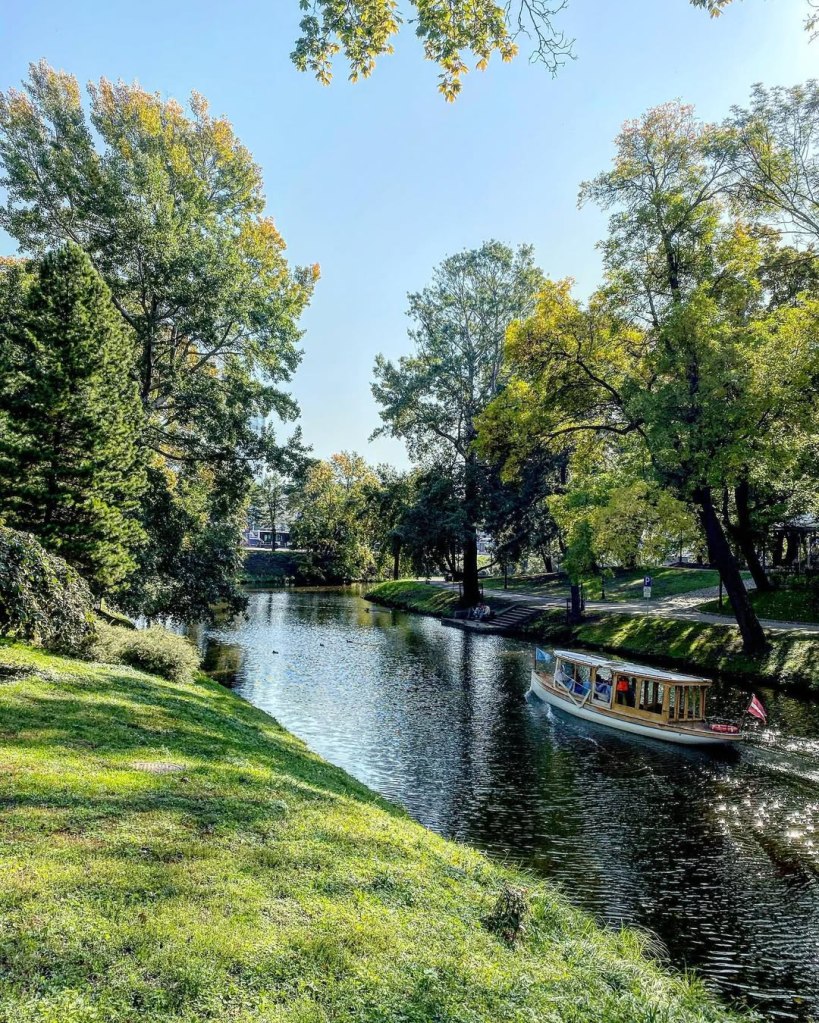
It’s like a breath of fresh air away from the busy streets and downtown. In Riga, the park has a canal running through it and a bridge with love locks. During the Summer months its a great place for a jog, for relaxation or a picnic, and for a boat ride.
THE THREE BROTHERS
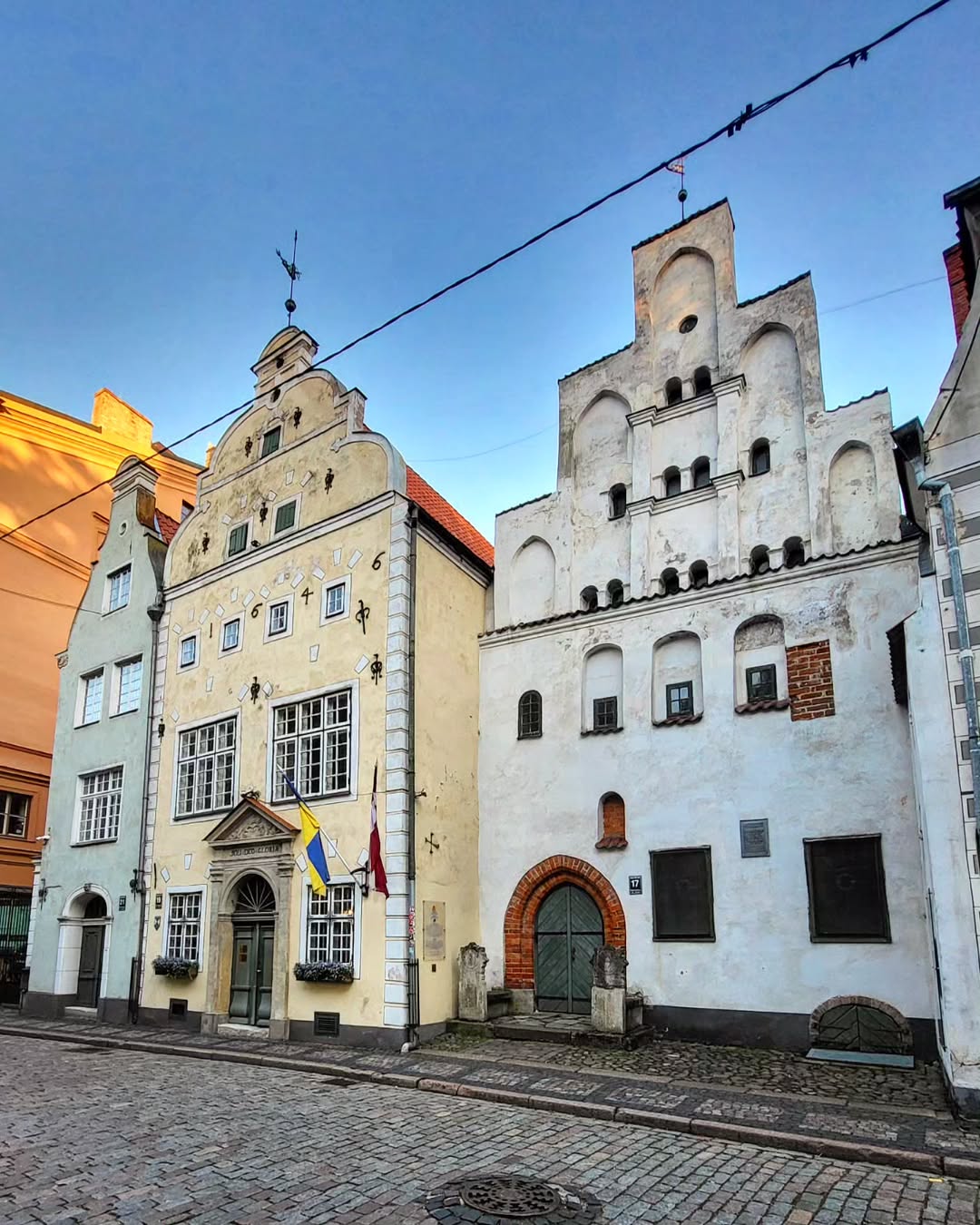
Located in the Old Town, almost impossible to photograph, but pretty nonetheless. Together, the houses form the oldest complex of dwelling houses in Riga. The white house is from the 15th century, the yellow is from 16th and the green from the 17th century.
RIGA’S ARCHITECTURE
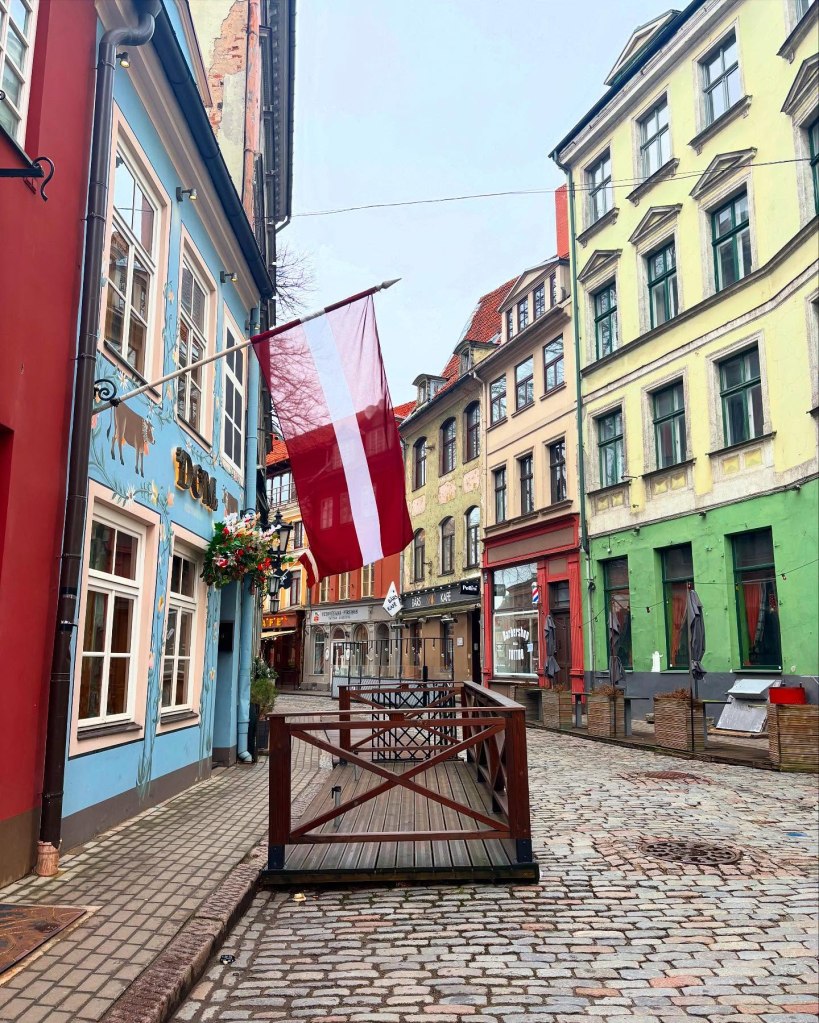
So cosy and so charming. The architecture in Riga goes from wooden buildings to art nouveau, from Modernism to Gothic. It’s a different landscape depending on which part of town you walk though, and you’ll be able to find unique statues of cats, wooden compounds, and colourful houses.
Be sure to bring your camera as you’ll want to snap pictures!
RIGA BLACK BALSAM
When I first heard the word “Riga balsam”, I thought of hair product or something. In Latvia, balsam has nothing to do with hair products. Can you guess what it is?
ALCOHOL, of course!
Black Balsam is made from pure vodka and it’s used in traditional medicine and sold in every tavern in town. It’s kind of a must when you’re in Riga.

A BITE TO EAT
Riga’s nightlife scene is becoming more cosmopolitan over the years. The neighbourhood pubs are still thriving and many clubs are once again open until the last paying customer leaves.
FOLKSKLUB ALA PAGRABS – folkklubs.lv
This huge cavern filled with the bubbling magma of endless beer-infused joy, folk-punk music, dancing and Latvian nationalism, this is an essential Riga drinking venue. The bar strives to reflect the full geography and diversity of Latvian beer production, but there is also plenty of local cider, fruit wine and Smakouka. Don’t forget the Black Balsam!

Duvels – gastropubduvels.lv
Located at Meistaru iela 10/12, Centra rajons, this is a brilliant gastro-pub offering all sorts of comfort foods and great beers.

Skyline Bar – skylinebar.lv/en
Skyline is a cocktail lounge on the 26th floor of the Radisson Blu hotel. The view is absolutely incredible, possibly the best in Riga. See the Old Town on one side, and the Art Nouveau district on the other. It’s worth seeing at least once.
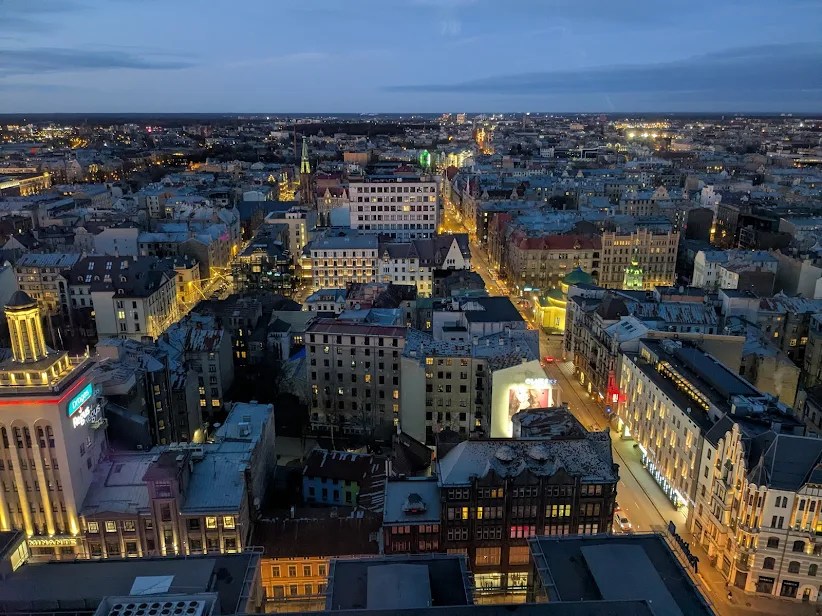
This unmatched location makes it very busy in the evenings; we recommend going on Mondays or Tuesdays to avoid paying a cover charge. The cocktails are also amazing, if a little pricey by Latvian standards.
Final Thought…
If you haven’t considered Latvia then maybe you should. Winter was a cold yet magical place. The frozen air being warmed as you breathe in. I very much would like to visit during the Summer months to experience the contrast. Either way, I doubt you will leave Latvia disappointed.
Other Links: Europe Homepage |Destinations Homepage | Main Homepage
 theresafrogontheporch.com