
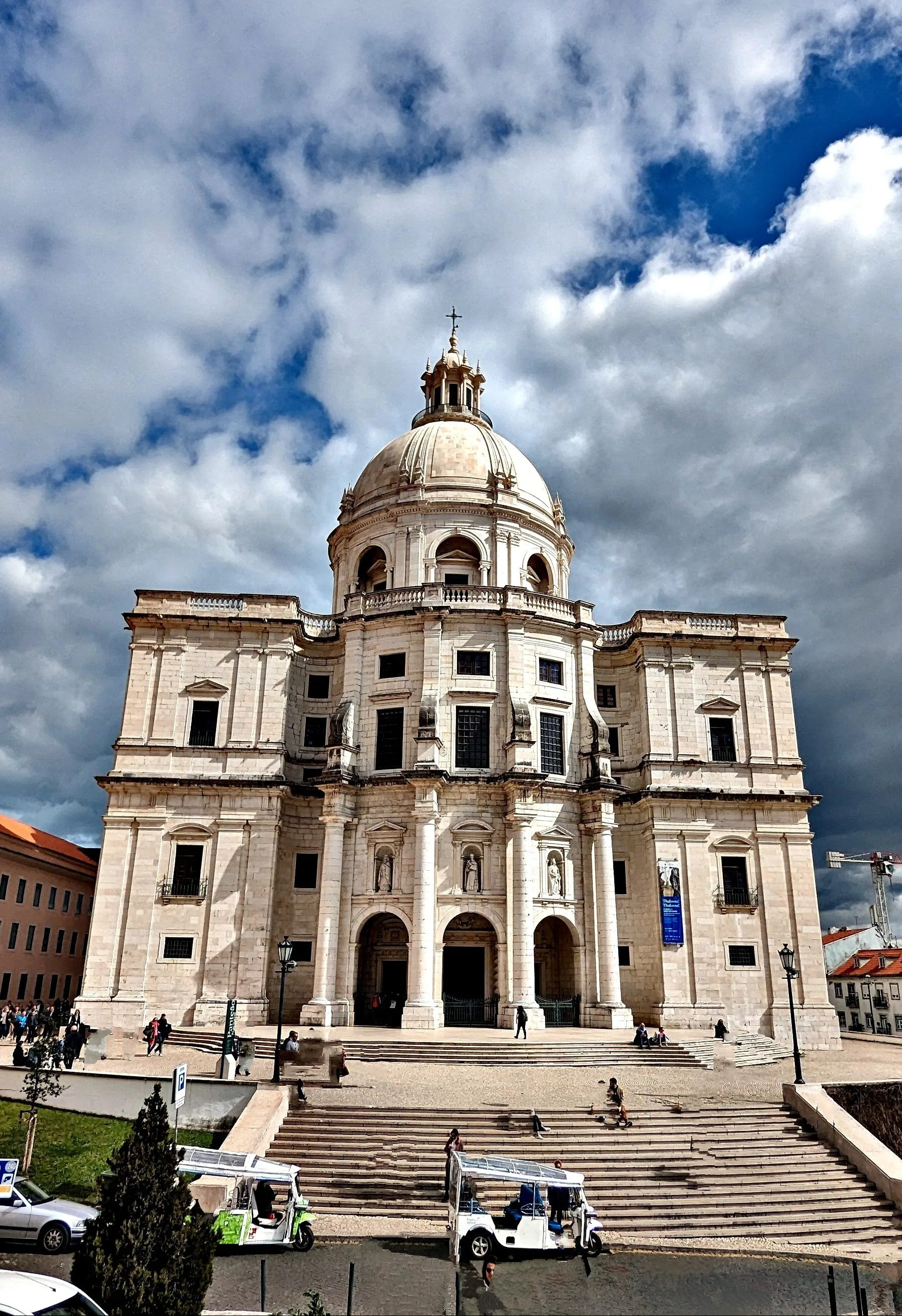
Berlin
Germany
Travel | April 2026
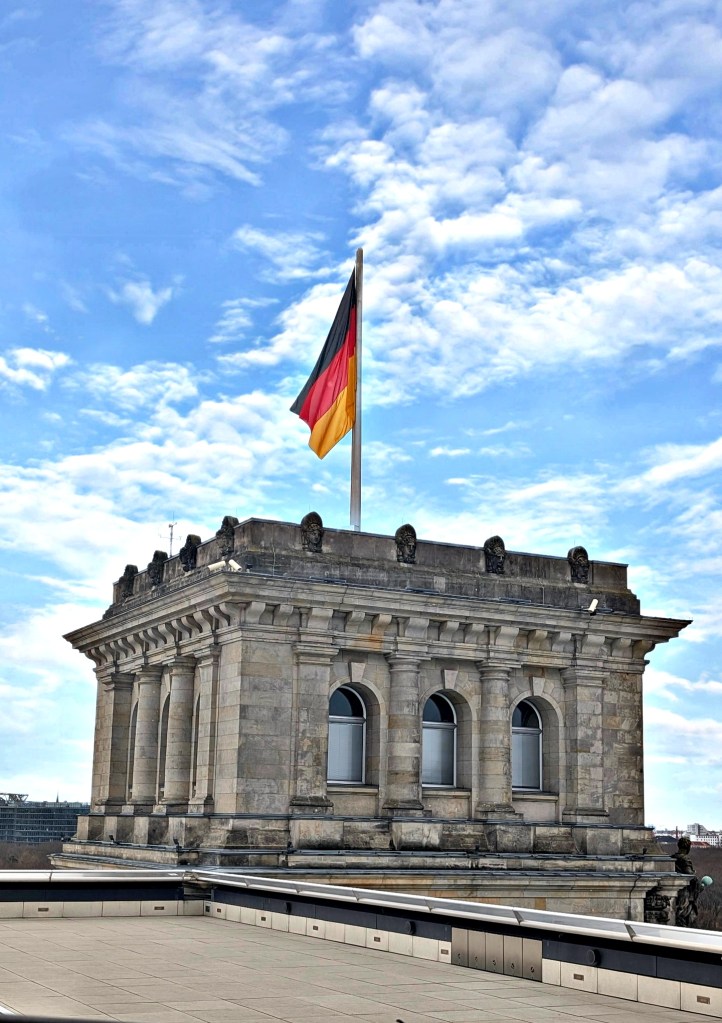
“Hallo und Willkommen…
.. in Deutschlands Hauptstadt, wo Geschichte an jeder Ecke spürbar ist”.
Which translates to “Hello and Welcome…to Germany’s capital city, where history is around every corner”.
Berlin is not a city that asks for approval; it demands curiosity. It’s a sprawling, magnetic metropolis where the heavy silence of 20th Century history harmonises with the pulse of a world class “techno gritty” scene.
You’ll find Michelin starred dining tucked inside industrial warehouses, somber Cold War memorials standing beside vibrant open air galleries, and lots of green spaces.
Whether you’re wandering the grand museums of Mitte, getting lost in the bohemian streets, or watching tourists darting around the monuments, Berlin feels less like a single destination and more like a collection of distinct worlds.
It’s a city that has been broken and rebuilt a dozen times over. A place where the past is always present, but the future is being played in real time.
Some Basic Information
ℹ️ TRAVEL: There are numerous flights that leave The UK for Berlin, arriving into the city’s new international airport, Berlin Brandenburg (BER). Flights roughly take 1 hour 45 minutes.
For up-to-date information on the new 2025/2026 EU entry/exit system visit this link.
ℹ️ AIRPORT TRANSFER: There are many ways to transfer from the airport including cheap and more costly alternatives. The cheapest and by far the easiest way into Berlin is to use the Deutsche Bahn located at Berlin Terminal one. Follow directions for the station and purchase a ticket for €5 (GB£4.35/US$5.75). Train journeys will take around 30 minutes.
NOTE: you must remember to validate your ticket at the machines on the platforms before you begin your journey.
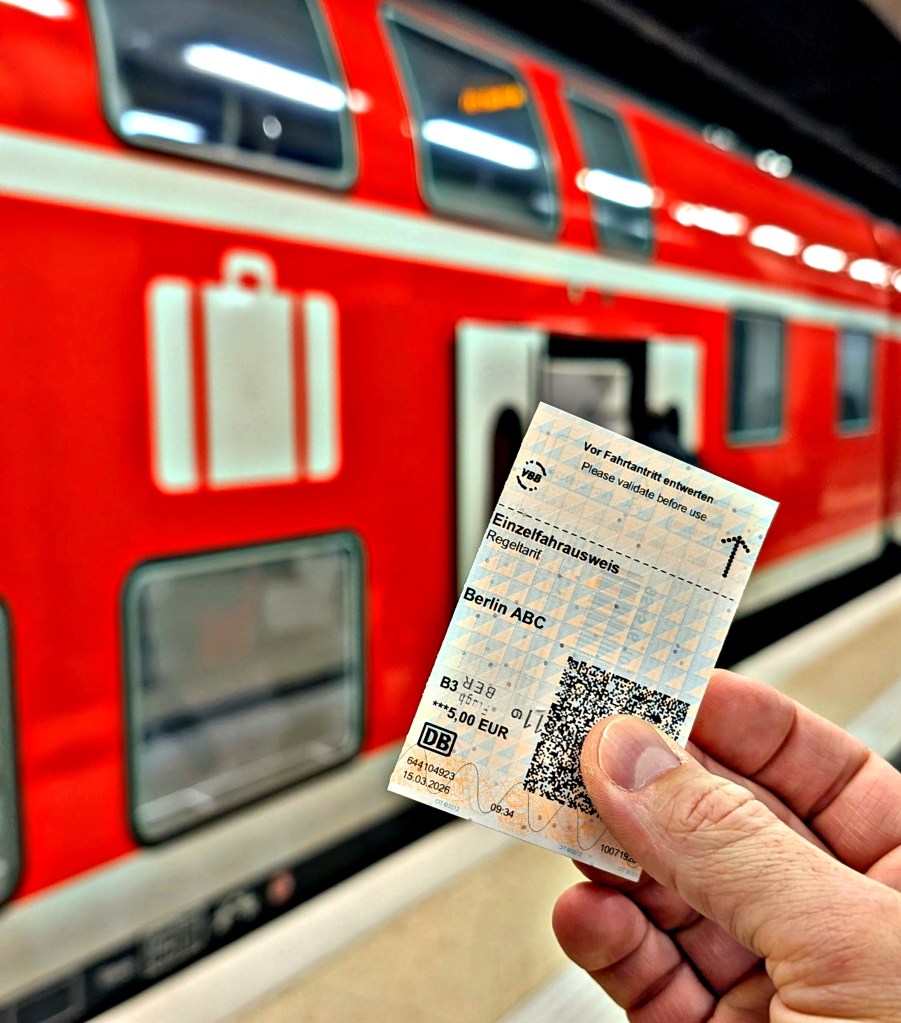
Airport train
ℹ️ CURRENCY: Germany uses the Euro (€). Germany is part of the European Union (EU)
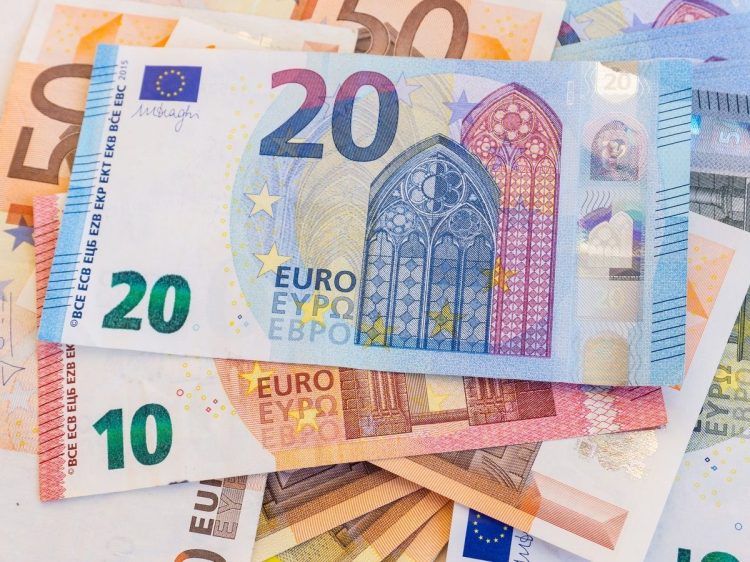
Courtesy of Google.com
ℹ️ CREDIT CARDS AND BANKS: ATMs are common place across the city. You will have no difficulties using your bankers card in cafes, restaurants and shops. The vast majority of market stall street sellers only accept cash. Always carry a little cash on you just in case you require it for the market stalls.
ℹ️ WEATHER: Summers in Germany can be long and hot with temperatures easily reaching the mid-30sC. Winter are cold and dark.
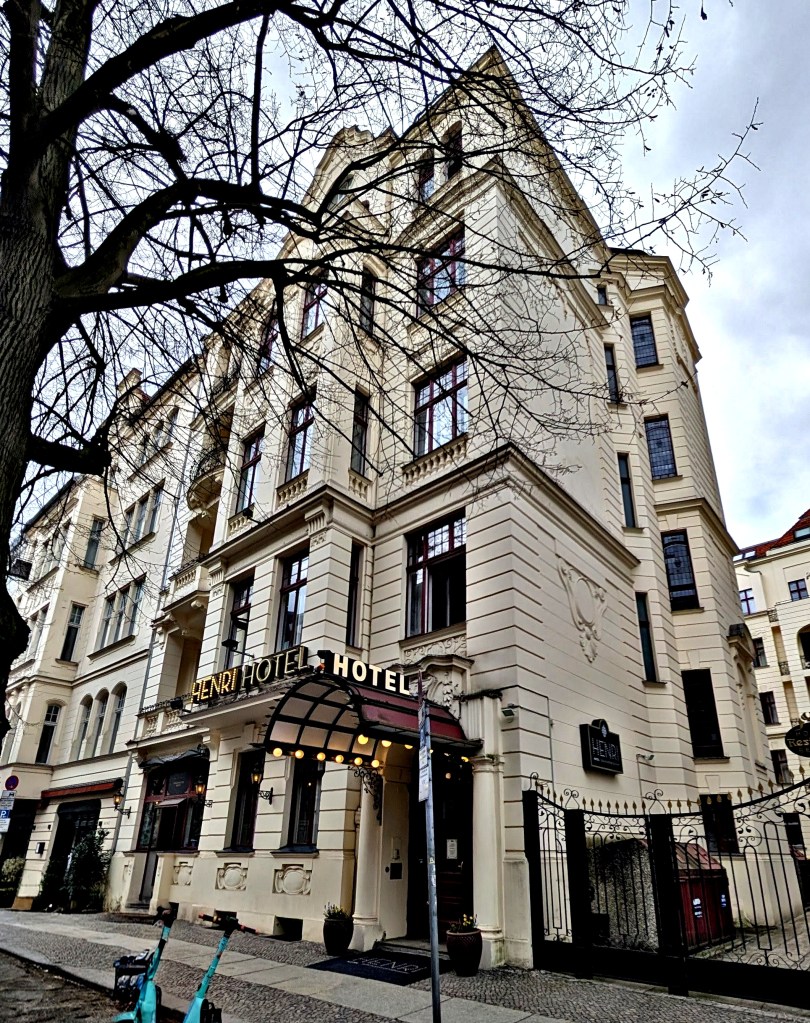
ℹ️ ACCOMMODATION: Hotels and Guesthouses are abundant and reasonably cheap around the city. I stayed at the very comfortable HENRI hotel located near the main shopping area of Kurfurstendamm. The location is excellent for both the city and the surrounding areas, and the rail station ‘Zoologischer Garten‘. In addition, a very good breakfast is served.
Some Brief History
Berlin’s history is a rollercoaster of extremes from the capital of the Kingdom of Prussia, growing into a military and intellectual powerhouse under leaders like Frederick the Great in the 1700s, to the capital of the newly unified German Empire in the late 1800s.
After the trauma of WWI the 1920s saw Berlin explode into an age of science, art, and nightlife making it one of the most liberal cities in the world until 1933 with the Nazi rise to power, turning Berlin into the command centre for WWII. By 1945, the city was almost entirely reduced to rubble by Allied bombing and the final Soviet assault.
After second World War, Germany and Berlin were split into West Germany governed by the FRG (the allied Federal Republic of Germany), and East Germany governed by the GDR (the Soviet communist German Democratic Republic) sectors.
In 1961 the Berlin Wall was built overnight to stop East Germans from fleeing into the West. On 9th November 1989 the Berlin Wall fell leading to German Reunification in 1990. Since then Berlin has rebuilt itself into a symbol of freedom.
What Can Berlin Offer?
Brandenburg Gate
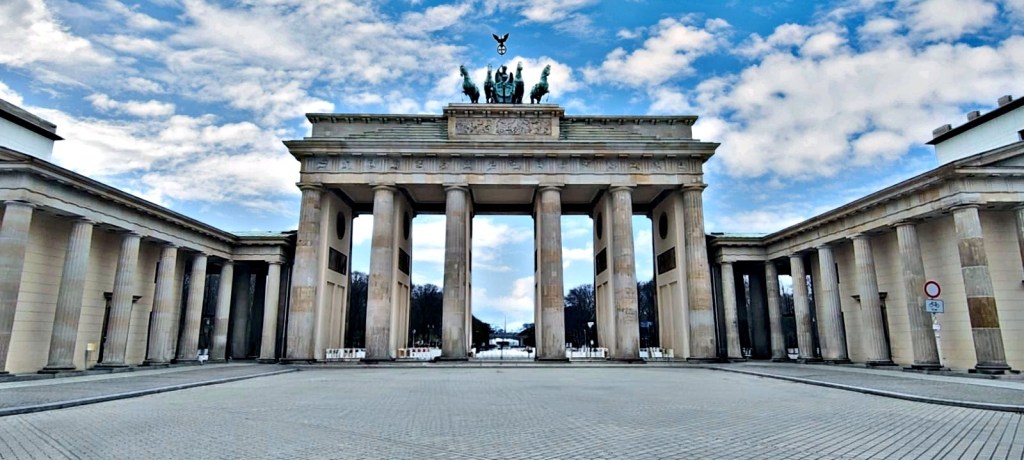
The Brandenburg Gate (das Brandenburger Tor) is Berlin’s most famous landmark, serving as a powerful symbol of German reunification and peace. The gate features 12 Doric columns and is topped by a classical statue of a goddess in a chariot. Located at Pariser Platz, it was once a restricted area during the division of the city.
Commissioned by King Frederick William II of Prussia and completed in 1791, it was designed as a “Gate of Peace” to mark the end of the Boulevard Unter den Linden. During the Cold War, the gate stood in a “no-man’s land” between East and West Berlin, isolated behind the Berlin Wall. The Brandenburg Gare has become synonymous for Germany and Germans alike for ‘unity’ and features on the German Euro coins, and used as a backdrop for celebrations.
Photograph courtesy of rjph2891
Reichstag Building
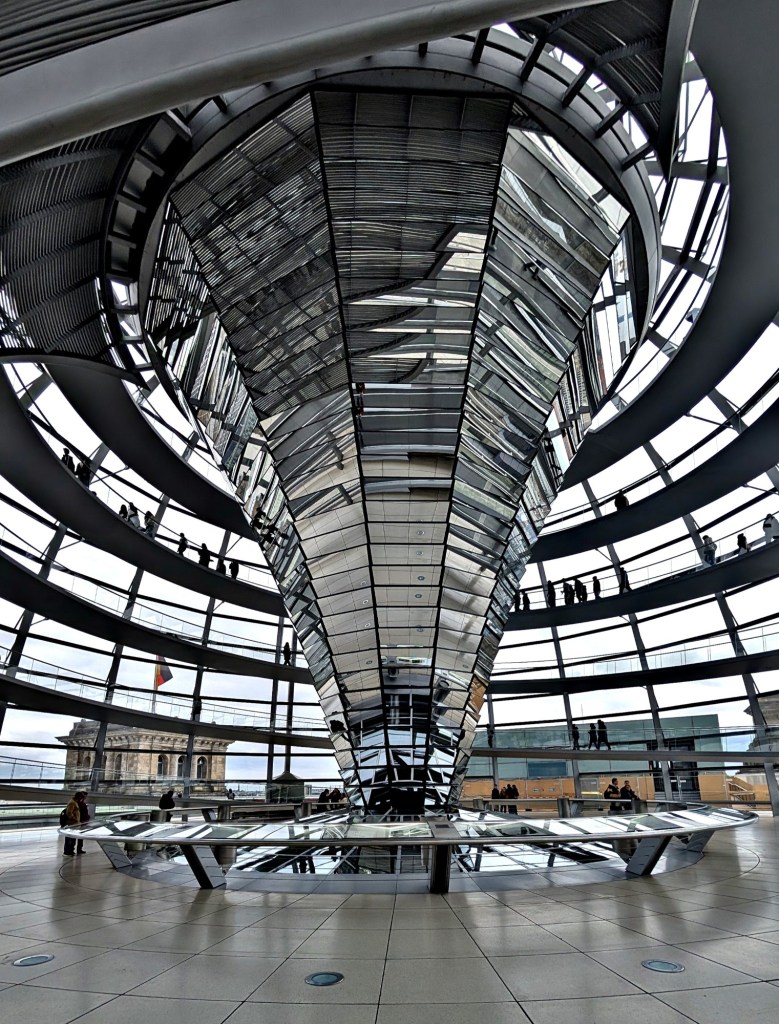
The Reichstag Building is the seat of the German parliament and is celebrated for its blend of 19th century architecture and futuristic glass dome roof design with 360 degree views overlooking Berlin.
The building has had to overcome years of turmoil. The building was intended to house the parliament of the German Empire. It famously bears the inscription “Dem Deutschen Volke” (“To the German People”), added in 1916 during WW1.
It has overcome an arson attack in 1933 when Hitler became chancellor; The Soviet flag was raised on top of the buildings ruins in 1945 to symbolise the end of WW2; Were it was left as an empty shell until the reunification of Berlin post-Berlin wall.
Tourists can enter the building and roam the glass rooftop free of charge, but must register their interest before arriving, by showing an authorisation email to the security check-point upon entering.
To apply for a visit use this link.
Checkpoint Charlie
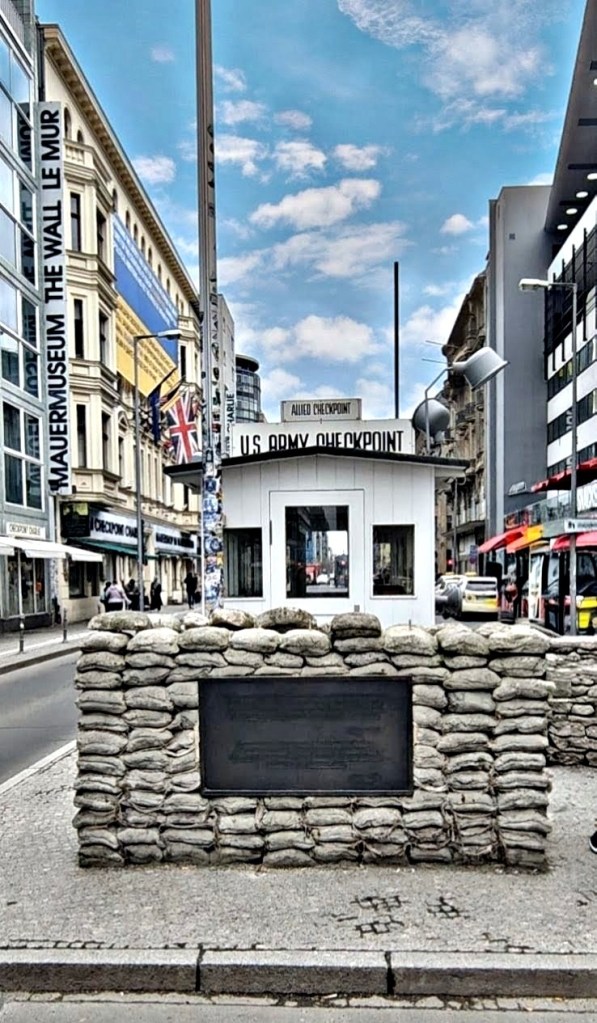
Located near to the Brandenburg Gate, Checkpoint Charlie was the most famous crossing point between East and West Berlin during the Cold War. After the Wall fell in 1989, the original guardhouse was removed. Today, a replica of the white sentry box and the iconic “You are leaving the American Sector” sign stand as reminders of the city’s former division.
Established by the Allies in 1961, shortly after the construction of the Berlin Wall, its name comes from the phonetic alphabet (Alpha was at Helmstedt, Bravo was at Dreilinden, and Charlie was the third). In October 1961, it was the site of a tense 16 hour confrontation where American and Soviet tanks faced each other at point blank range, bringing the world to the brink of another war.
Museum Island
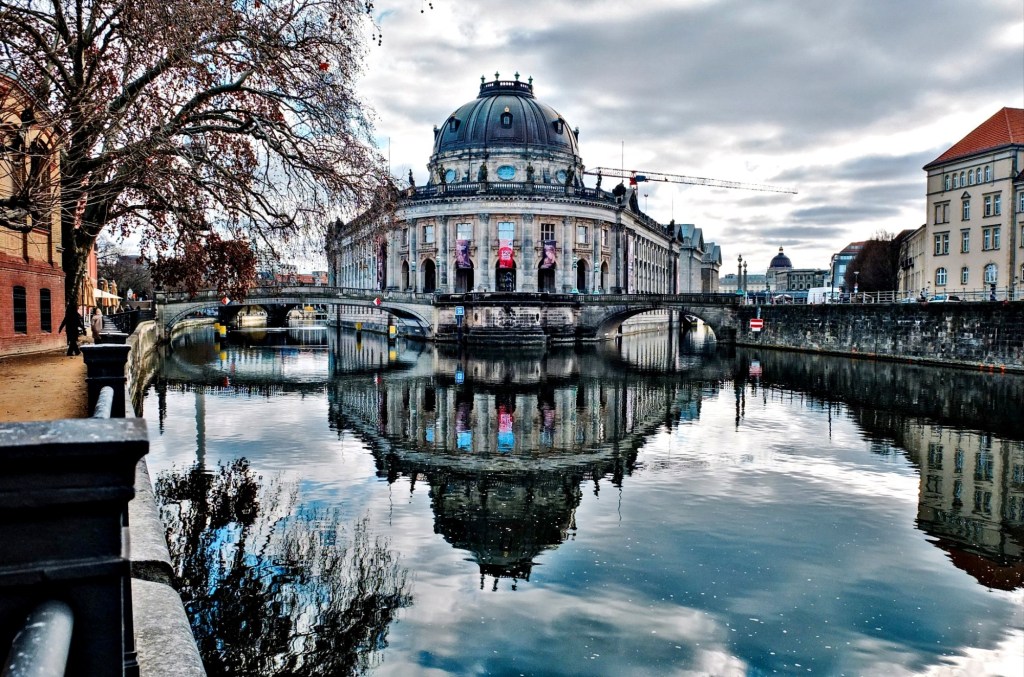
Museum Island (Museumsinsel) is a UNESCO World Heritage site consisting of five world renowned museums situated between the Spree River and the Kupfergraben.
East Side Gallery
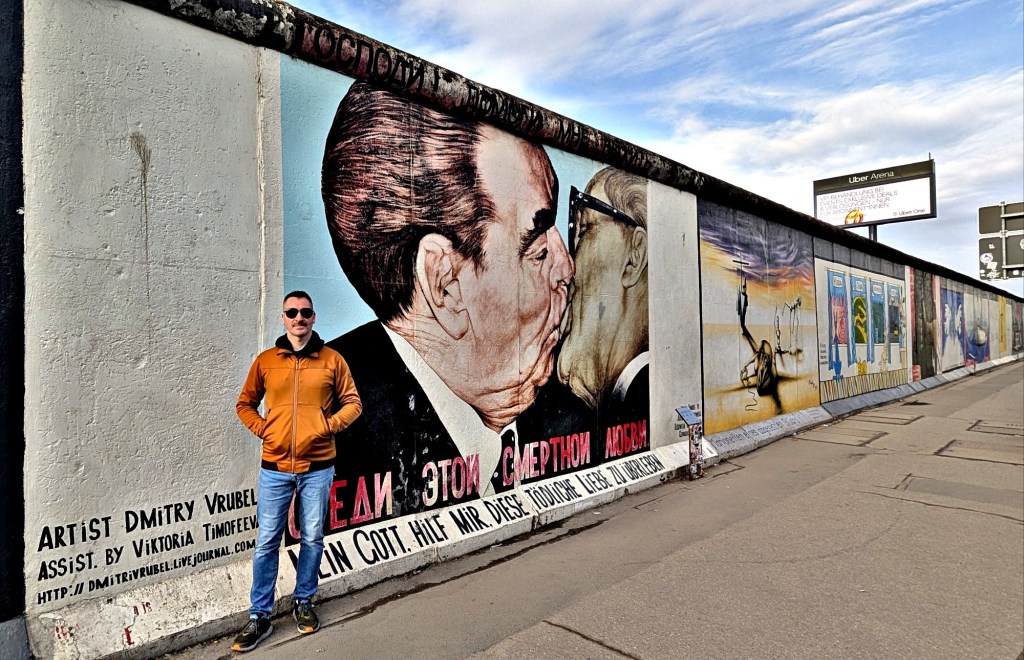
The East Side Gallery is the longest remaining section of the Berlin Wall, now serving as the largest open air gallery in the world. The wall stretches 4317 feet or 0.8 miles (1316 metres), and is covered in murals by 118 artists from 21 countries. Its most famous painting is the ‘Fraternal Kiss’, offering a vibrant commentary on political freedom and the fall of the wall.
Holocaust Memorial
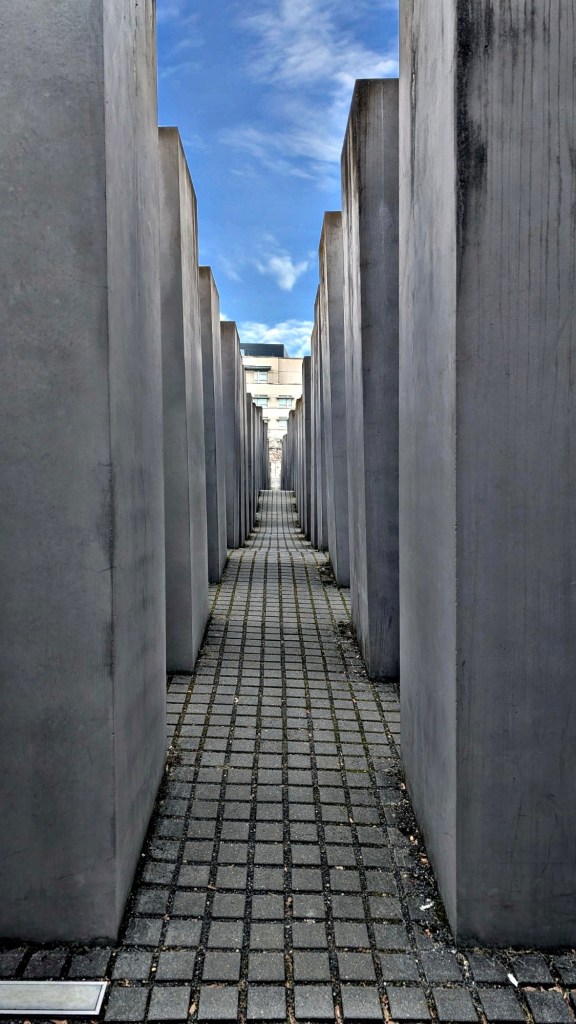
The Jewish or Holocaust memorial (Denkmal für die ermordeten Juden Europas) is a striking and somber tribute to the millions of victims of the Holocaust. Located near the Brandenburg Gate, it consists of 2,710 concrete blocks of varying heights arranged in a grid across a sloping field. The ground is intentionally uneven, designed to create a sense of disorientation, isolation, and unease as visitors walk deeper into the rows.
Berlin TV Tower
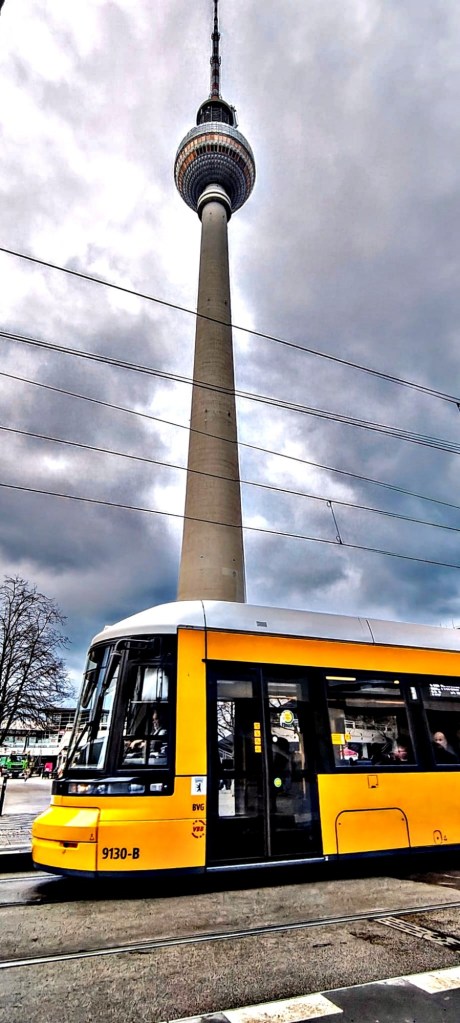
Berlin TV Tower (Berliner Fernsehturm) is Germany’s tallest structure and an unavoidable part of the Alexanderplatz skyline. The tower features an observation deck at 667 feet (203 meteres), offering panoramic views over the city, and a revolving restaurant just above it.
Tickets for the observation deck can be purchased through the official website. Tickets are currently priced at €25.50 (GB£22.20/US$29.45)
Photograph courtesy of rjph2891
The World Time Clock
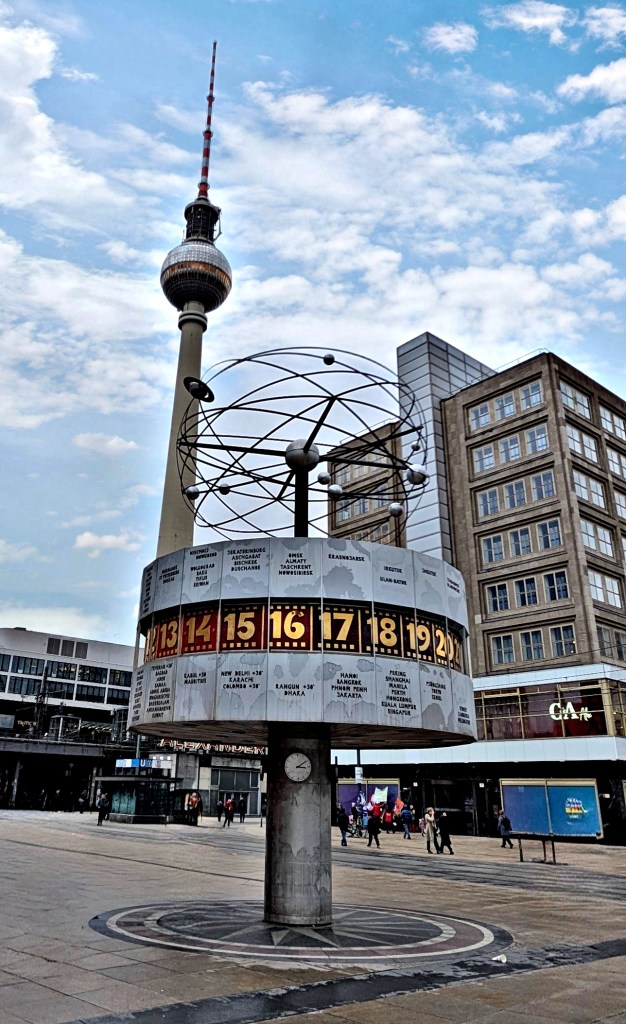
Die Weltzeituhr, as it’s known in German, is one of Berlin’s most iconic meeting spots, located in Alexanderplatz, along with the Berlin TV Tower. It was unveiled on 30th September 1969, as part of a massive socialist redesign of Alexanderplatz to celebrate the 20th anniversary of the GDR.
The clock is a 10 metres (32 feet) high column topped with a rotating cylinder divided into 24 segments, representing the world’s 24 time zones. It features the names of 148 major cities. To read the time a rotating ‘hour ring’ inside the cylinder moves past the stationary city names. To find the time in a specific city, you simply look at the number on the ring currently aligned with that city’s segment.
Berlin Cathedral
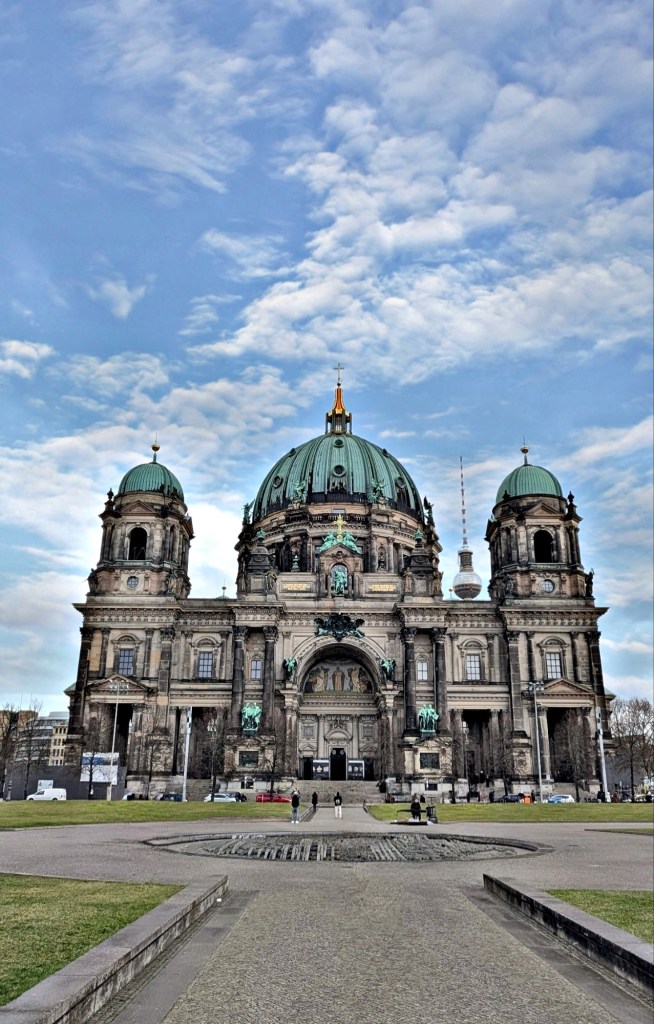
Berlin Cathedral (Berliner Dom) is a majestic 19th Century Protestant church located right next to Museum Island. During a 1944 air raid a bomb hit the lantern of the dome, causing a massive fire that collapsed severely damaging the ornate fittings below. During the Cold War the cathedral was located in East Berlin remaining in ruins until it went under restoration in 1975.
The cathedral’s basement houses the Hohenzollern Crypt, one of the most significant dynastic burial sites in Europe, containing nearly 100 sarcophagi spanning five centuries of Prussian and Brandenburg history.
The Kaiser Wilhelm Church
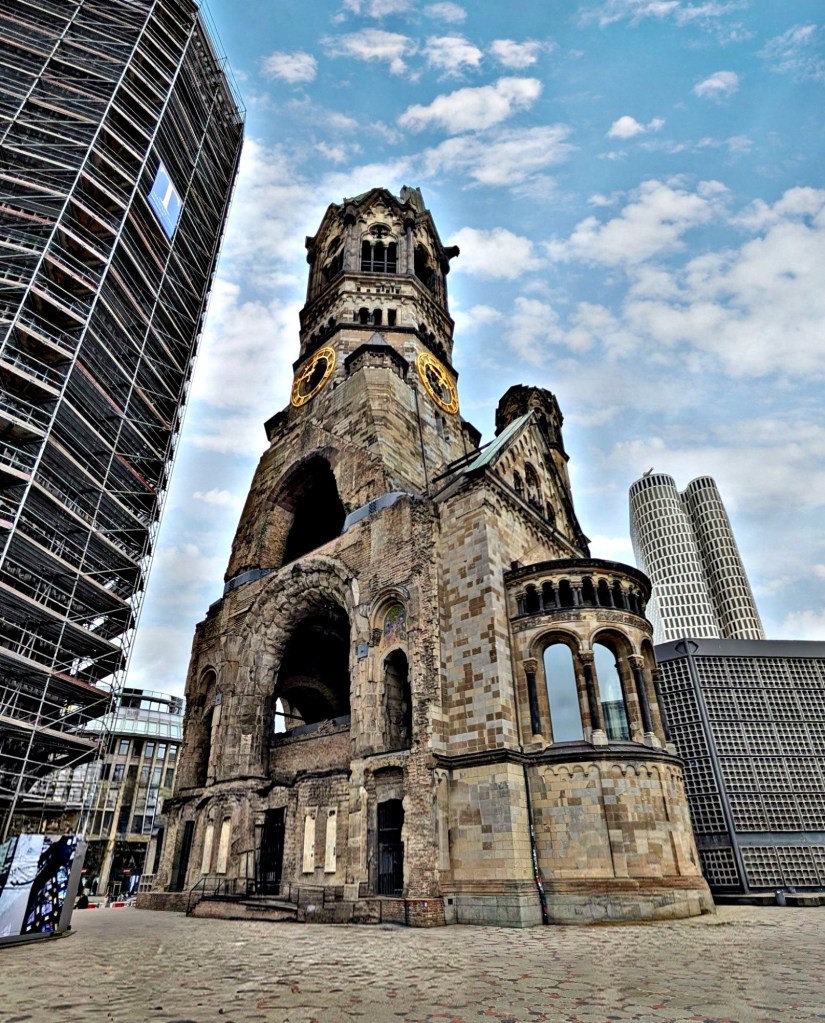
Located on Kurfürstendamm, is a famous church preserved as a war memorial that was badly damaged by an Allied bombing raid in November 1943. Its broken spire remains as a stark anti-war symbol, known locally as “der hohle Zahn” (the hollow tooth).
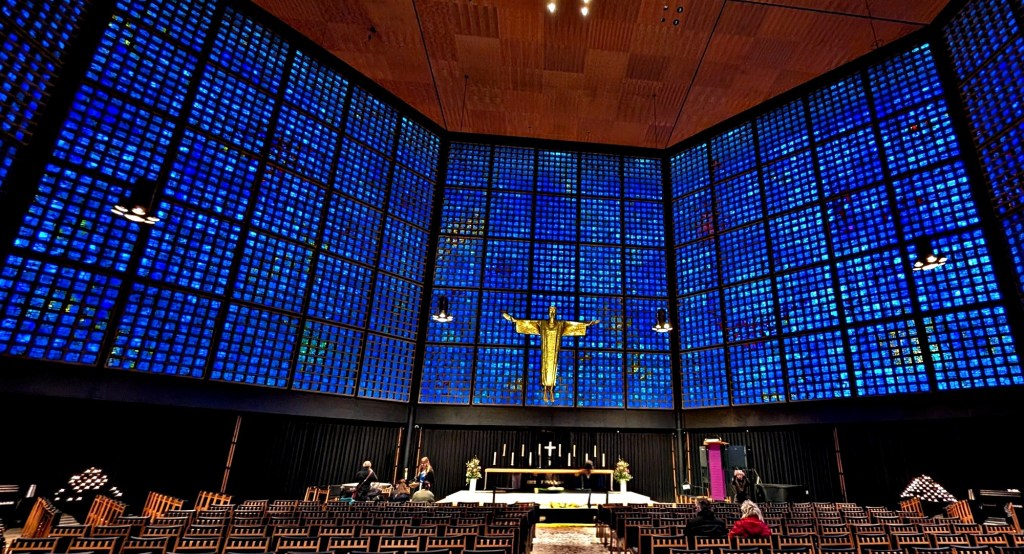
Between 1959 and 1963 an architect named Egon Eiermann designed a new complex around the ruins. This includes a modern octagonal bell tower and a chapel featuring thousands of intense blue stained glass inlays that glow from the inside. Inside the modern chapel you can find the “Stalingrad Madonna,” a simple charcoal drawing created by a German soldier during the Siege of Stalingrad that has become a powerful symbol of hope and forgiveness.
St. Nicholas Church
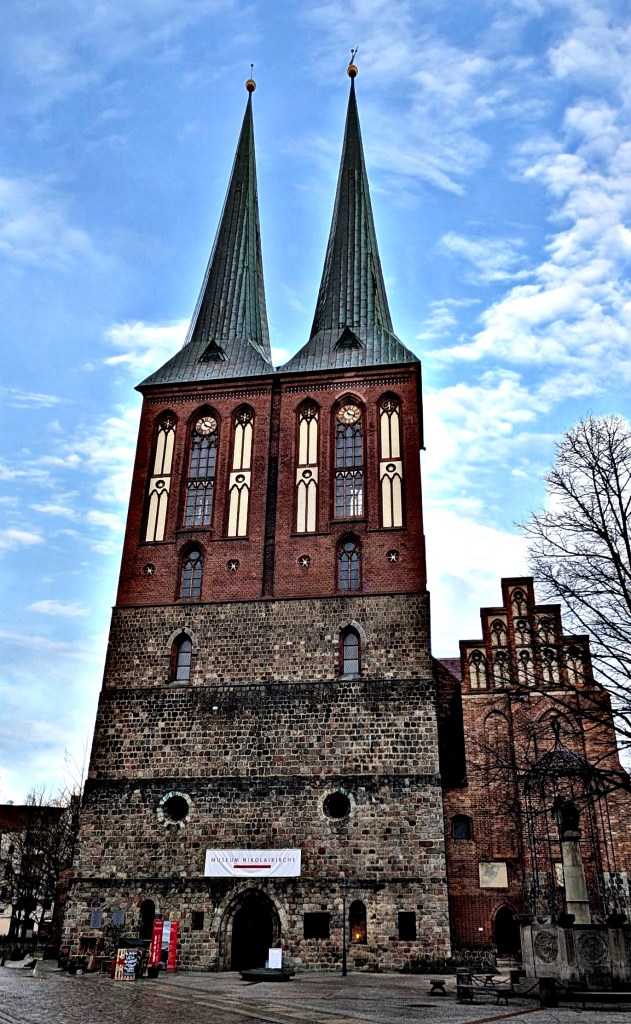
Located near Alexanderplatz, St. Nicholas Church (Nikolaikirche) is the oldest building in Berlin, dating back to approximately 1230. For centuries it was the main church where Berlin’s city council was sworn in. In 1539, it became the site of the first Protestant service in Berlin, marking a massive religious shift for the region.
During WWII, the church was almost entirely destroyed by Allied bombing. For decades after the war it sat as a roofless ruin in East Berlin. To celebrate Berlin’s 750th anniversary in 1987 the GDR government meticulously reconstructed the church and the surrounding neighborhood to resemble its pre-war state.
Victory Column
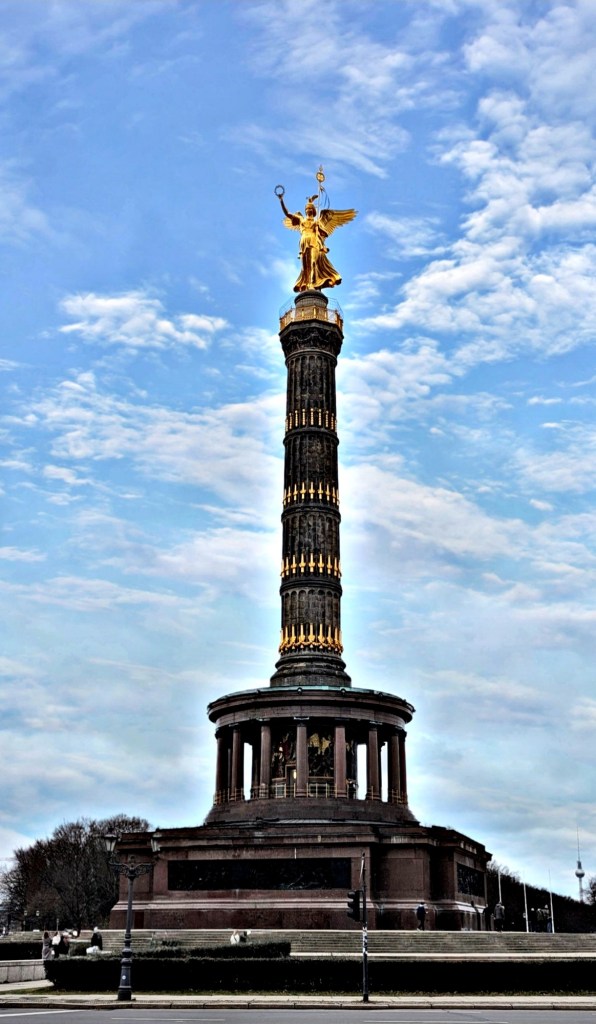
Known in German as Siegessäule, located on a roundabout in Tiergarten is one of Berlin’s most famous monuments. Originally, the column stood in front of the Reichstag building, topped by a 27 foot bronze statue of Victoria, the Roman goddess of victory, however, during the Nazi era it was moved to its current location.
It was originally built to celebrate military triumphs but now recognised as a major symbol of the city’s identity. The column was commissioned to commemorate Prussia’s victory in the Danish-Prussian War. By the time it was finished, Prussia had also won the Austro-Prussian and Franco-Prussian Wars, so the design was expanded to celebrate these “unification wars” that led to the founding of the German Empire.
You can ascend the 285 steps to the viewing platform for great views across the Tiergarten park. Tickets cost €4.50 (GB£3.90/US$5.20).
Berlin Zoological Garden
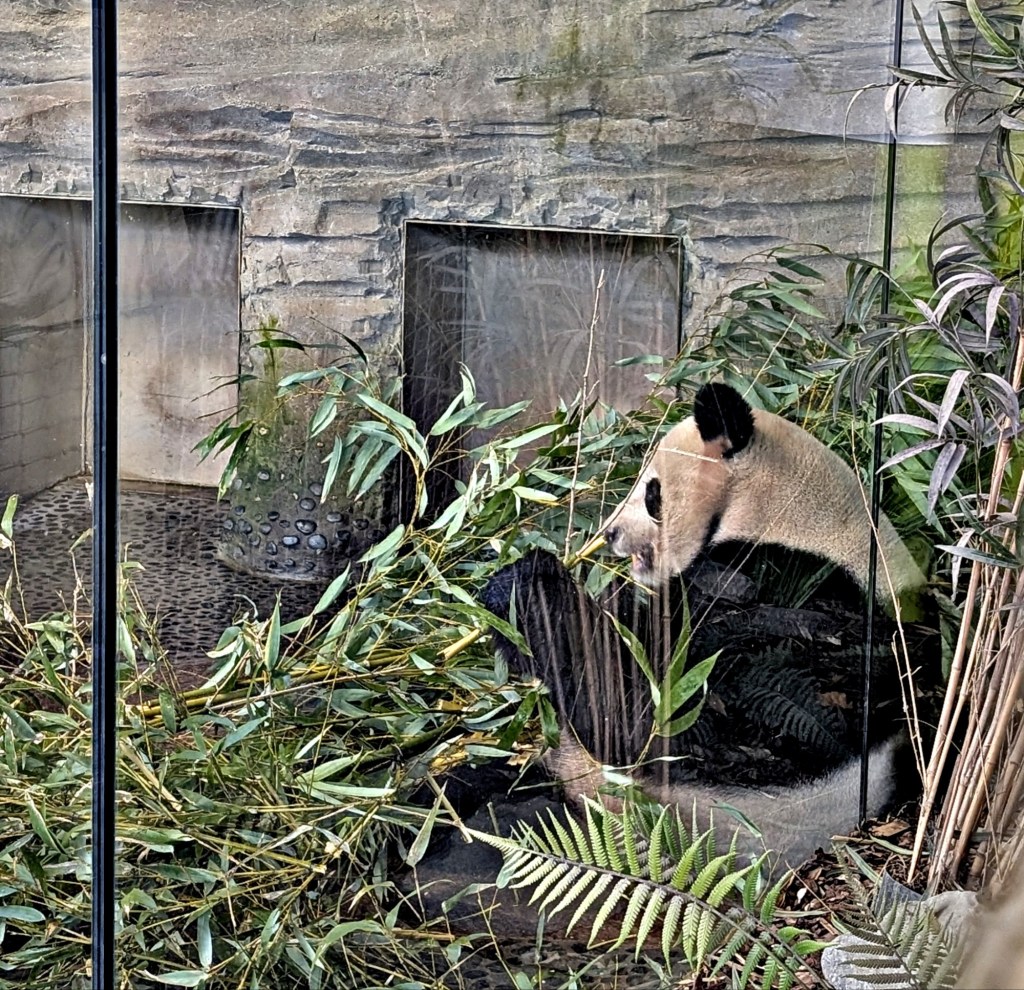
The Berlin Zoological Garden is the oldest surviving and best known zoo in Germany. Opened in 1844, it covers 35 hectares and is located in Berlin’s Tiergarten, containing 1,380 different species and over 20,200 animals.
Tickets cost €16 (GB£14/US$18.50) and can be purchased from the official website.
The Berlin Wall Memorial
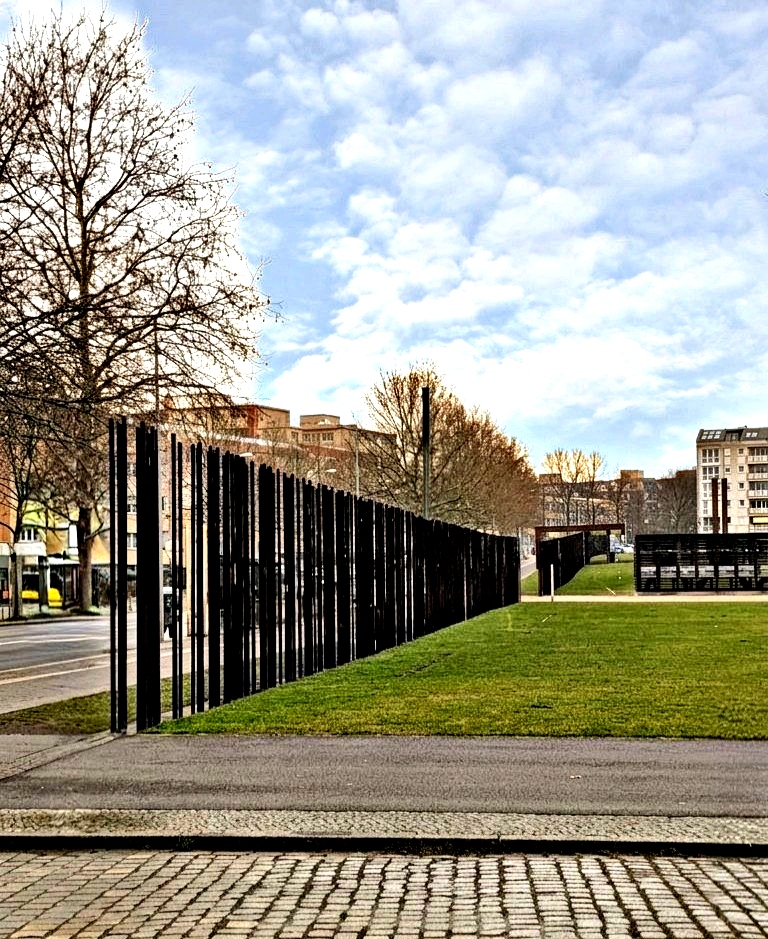
The large open-air exhibition of the Berlin Wall Memorial (Gedenkstätte Berliner Mauer) is the central memorial site of German division, located on Bernauer Straße. It stands as a somber reminder of a city once split in two.
When the wall was first erected on 13th August 1961, Bernauer Straße became a focal point of tragedy. The pathways were in the West, but the apartment buildings were in the East. Residents famously jumped from their windows into firefighters’ nets below to escape until the GDR (German Democratic Republic) bricked the windows shut.
After the wall fell, most of it was quickly dismantled. However, a 212 metre section was preserved on Bernauer Straße to ensure future generations wouldn’t forget the reality of the border. What makes it unique unlike other parts of the wall (like the colourful East Side Gallery), this memorial is raw and historical, including a fully preserved section of the ‘death strip’ with watchtowers and inner/outer walls.
There is a wonderful audio guide of the wall, provided the museum, by using this link.
The Führerbunker
The site where Adolf Hitler committed suicide on 30th April 1945 is one of the most historically significant yet intentionally ‘normal’ locations in Berlin.
The site was originally the location of the Führerbunker, a massive underground concrete complex located about 8 metres (26 feet) below the gardens of the old Reich Chancellery. It was here that Hitler spent his final months as the Soviet Red Army closed in on the city. After the war the Soviet Union and later the East German (GDR) government attempted to destroy the bunker to prevent it from becoming a neo-Nazi shrine.
Today, the site is a non-descript parking lot surrounded by apartment buildings, located near Gertrud-Kolmar-Straße (a short walk from Berlin Mall). For decades there was no marker at all to avoid drawing unwanted attention. However, in 2006 a simple information board was finally installed. It features a diagram of the bunker’s layout to provide historical context while ensuring the spot remains a place of education rather than a monument.
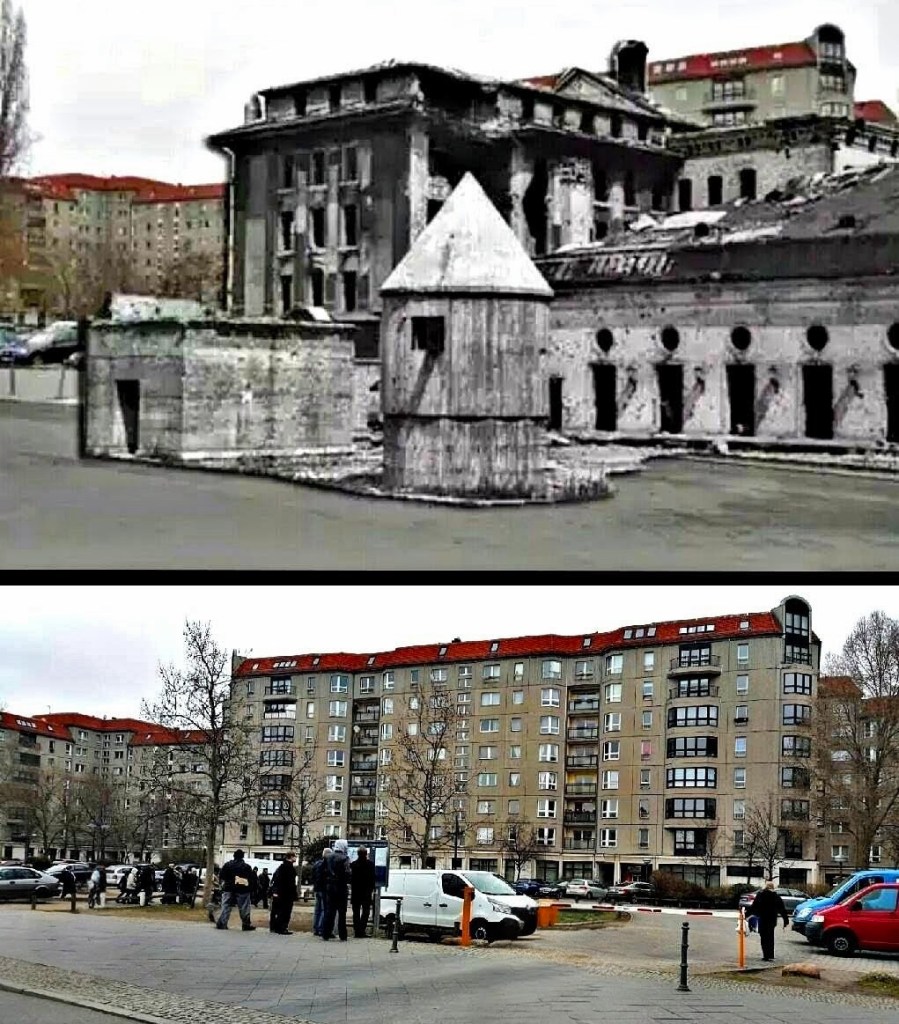
B&W photo courtesy of Google.com
Topography of Terror
The Topography of Terror (Topographie des Terrors) is one of Berlin’s most visited memorial sites. It’s unique because it focuses specifically on the perpetrators—the people and institutions that organised the Nazi regime’s crimes.
The museum is built on the exact grounds that served as the nerve centre of the Nazi police state between 1933 and 1945. It was the headquarters for the Gestapo (Secret State Police), The SS (Schutzstaffel – organisation responsible for security and surveillance), and The Reich Security Main Office. From this single city block officials coordinated the persecution of political opponents, the Euthanasia program, and the logistics of the Holocaust.
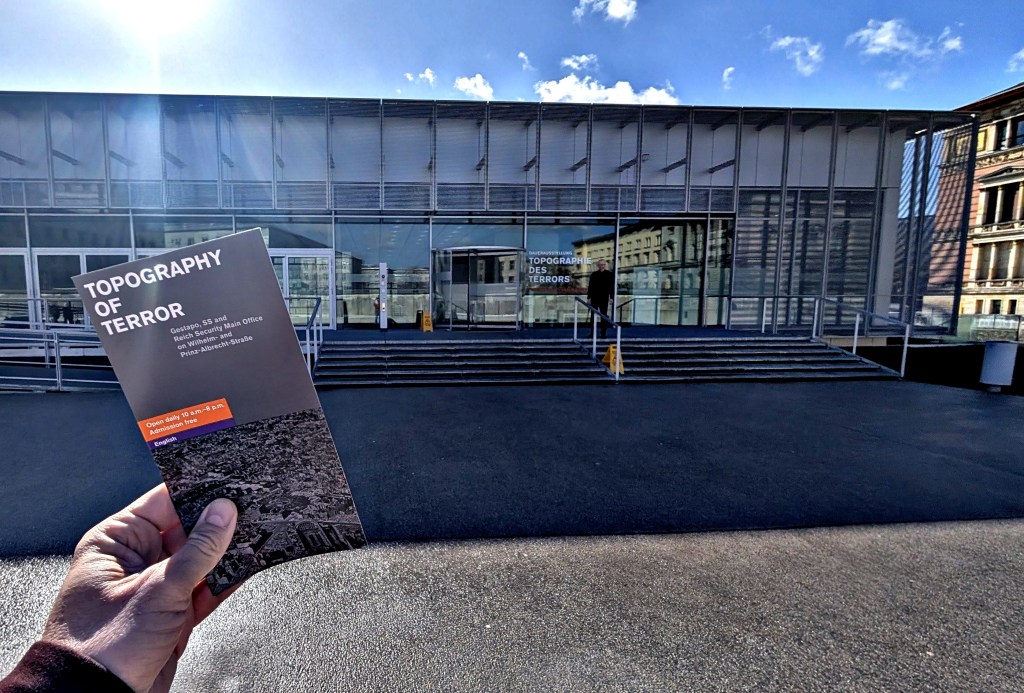
Shopping in Berlin
Berlin has some great places to go shopping, if that’s your thing. You have the Mall of Berlin located at Leipziger Platz, opened in 2011, it offers undercover high street brands and a food court.
Another great area to head for is Kurfürstendamm. It’s a long street lined on either side with department stores and independent’s.
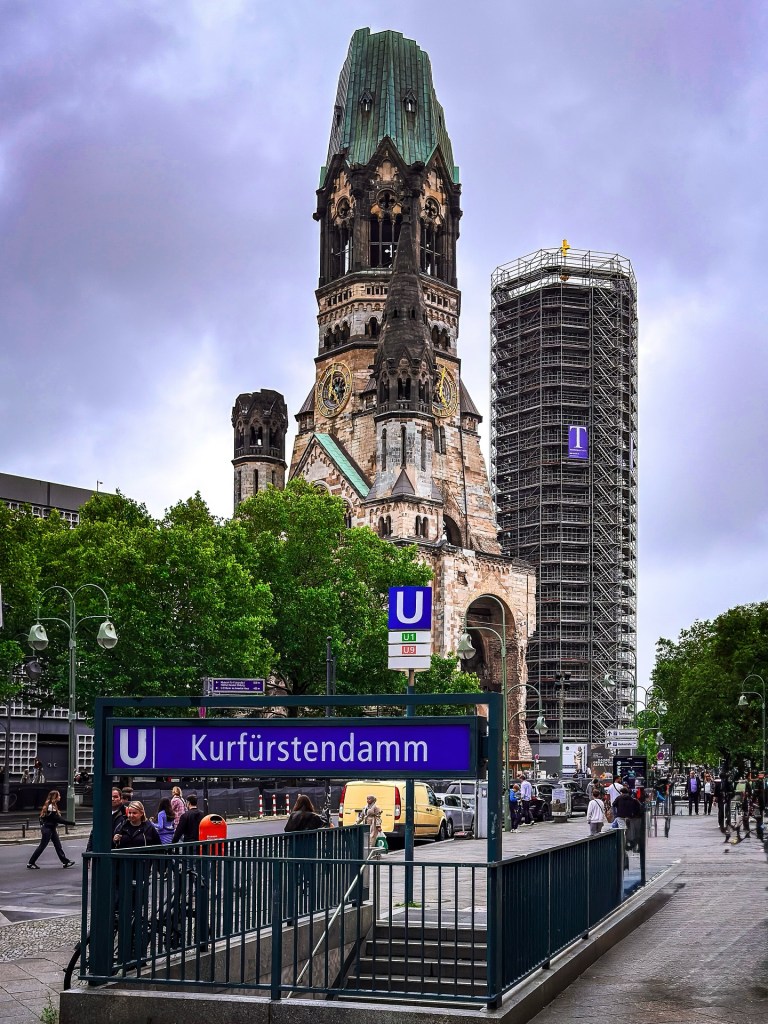
Where to Eat
Germany isn’t always known for its great food, however, there are plenty of places to eat, or even catch a drink and respite from all the exploring. Here are some venues I tried:
Schildkröte Restaurant – restaurant-schildkroete.de
Located on the busy Kurfurstendamm, this restaurant offer some fantastic warming food. I had the pork crackling with potatoes and sauerkraut.
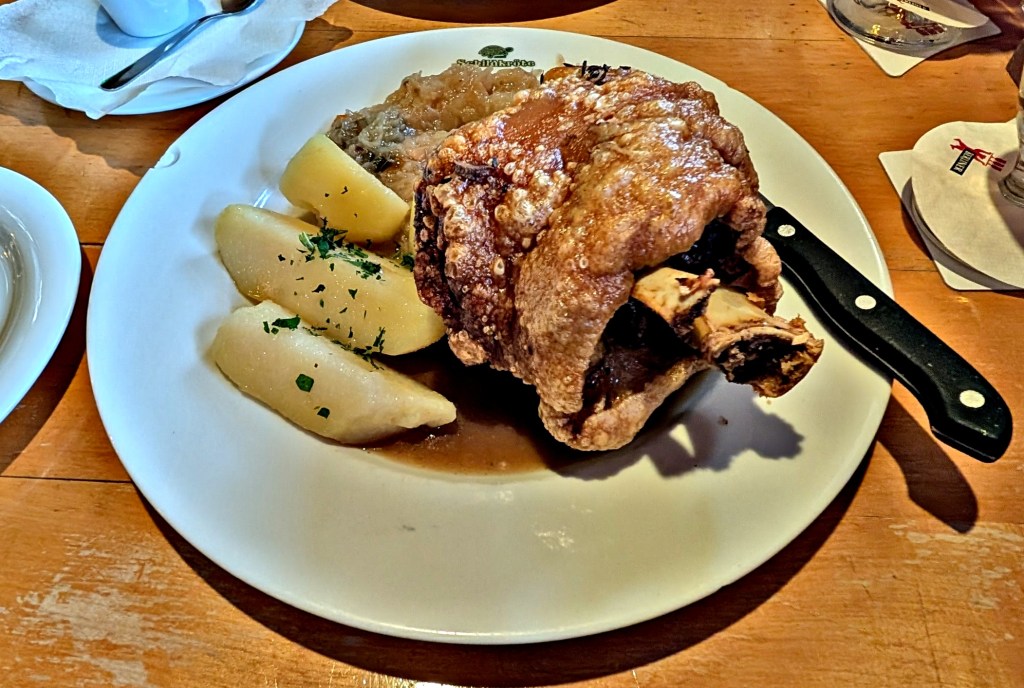
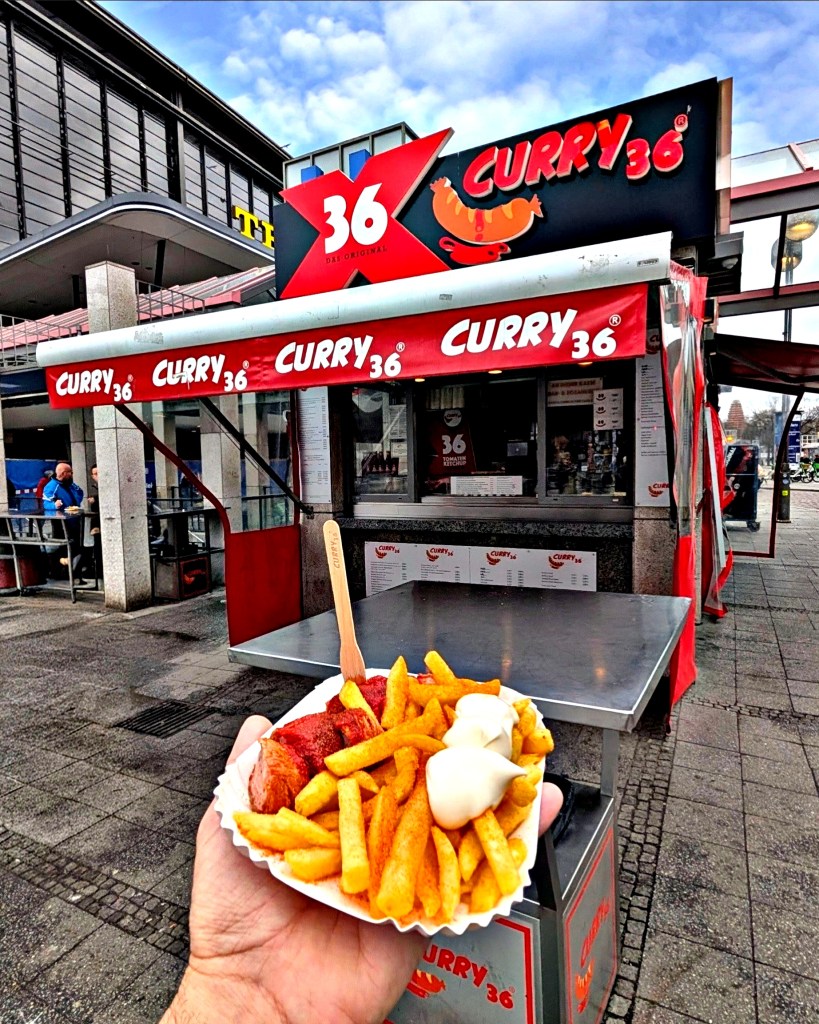
Curry 36 – curry36.de
Peppered all over the city either as a stand alone restaurant or street stall, Curry 36 offers simple variations of Wurst sausage, chips and lashings of sauce, at very reasonable prices.
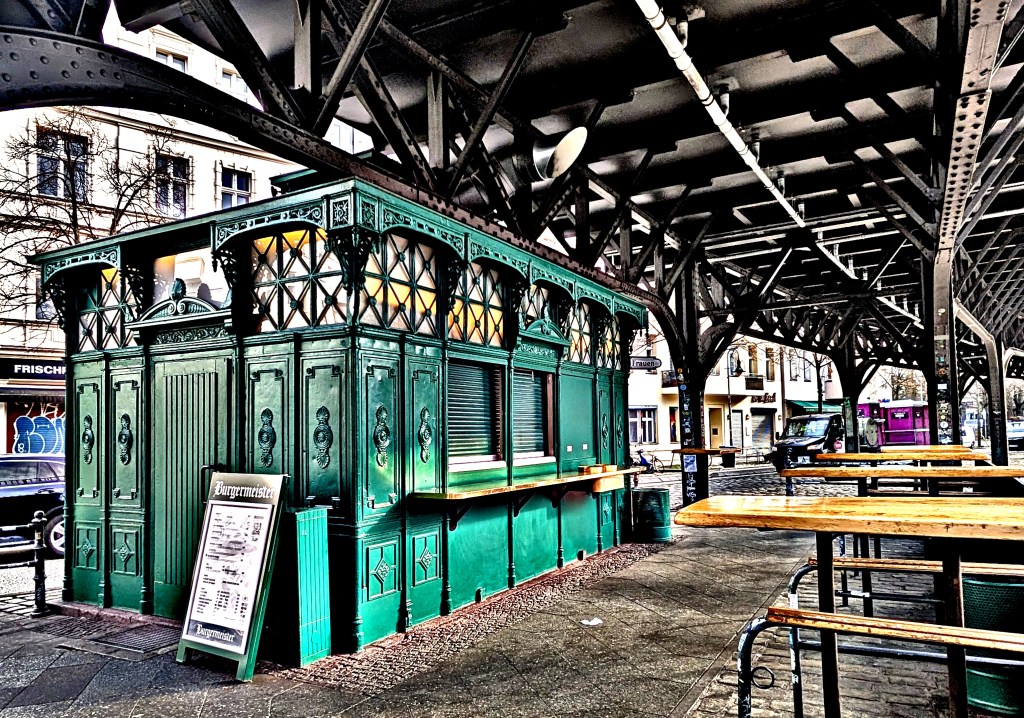
Burgermeister – burgermeister.com
These burger joints are darted over Berlin but make time for Burgermeister Schlesisches Tor. This is a disused public toilet now serving delicious quick food.
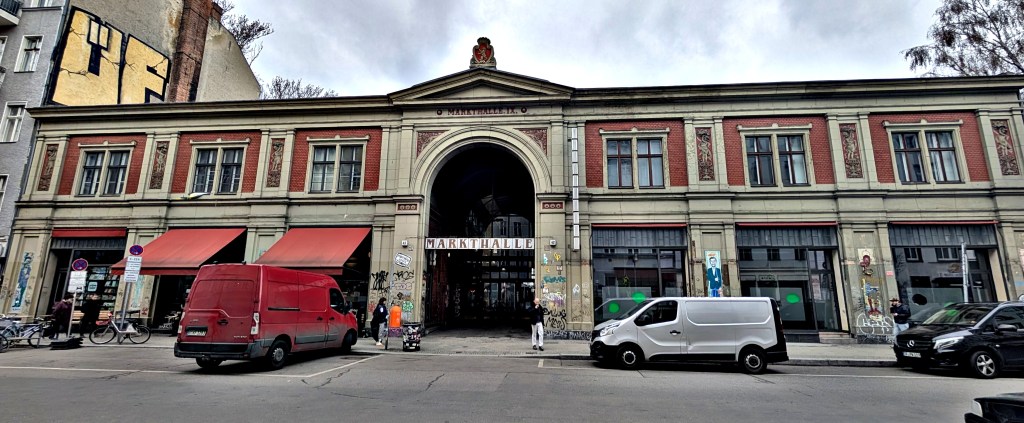
Markthalle – markthalleneun.de
Located at Eisenbahnstraße 42/43, offers casual and delicious market food stalls in amongst bakers and butchers.
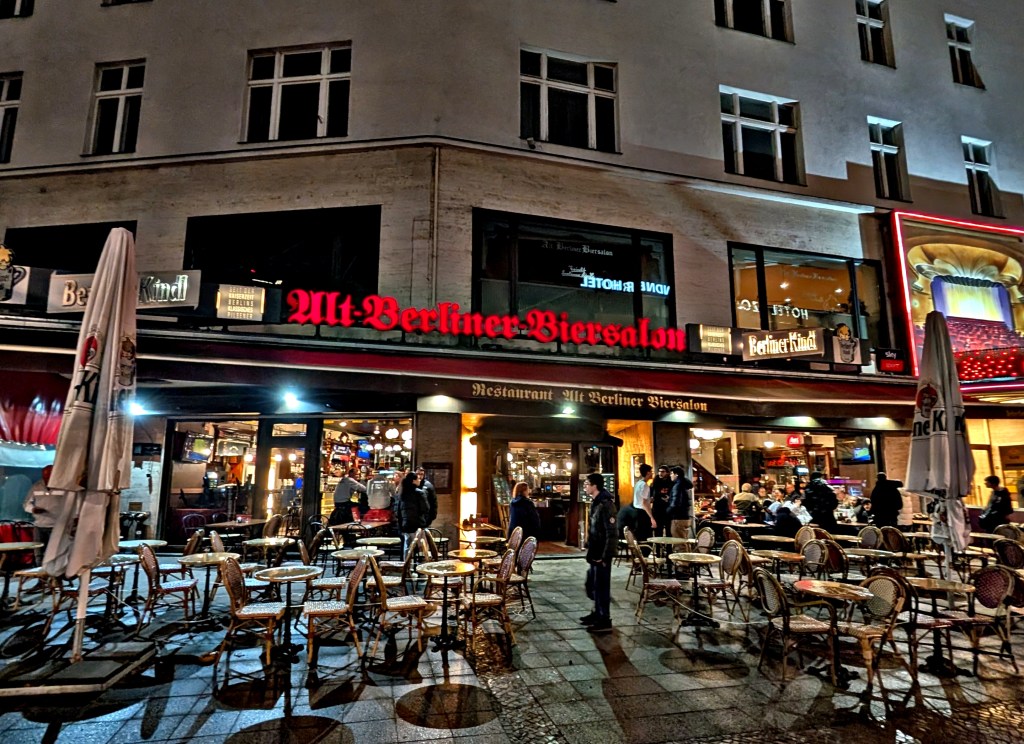
Alt-Berliner-Biersalon – alt-berliner-biersalon
Located on Kurfurstendamm district, this venue is brilliant for atmosphere, food and drinks.
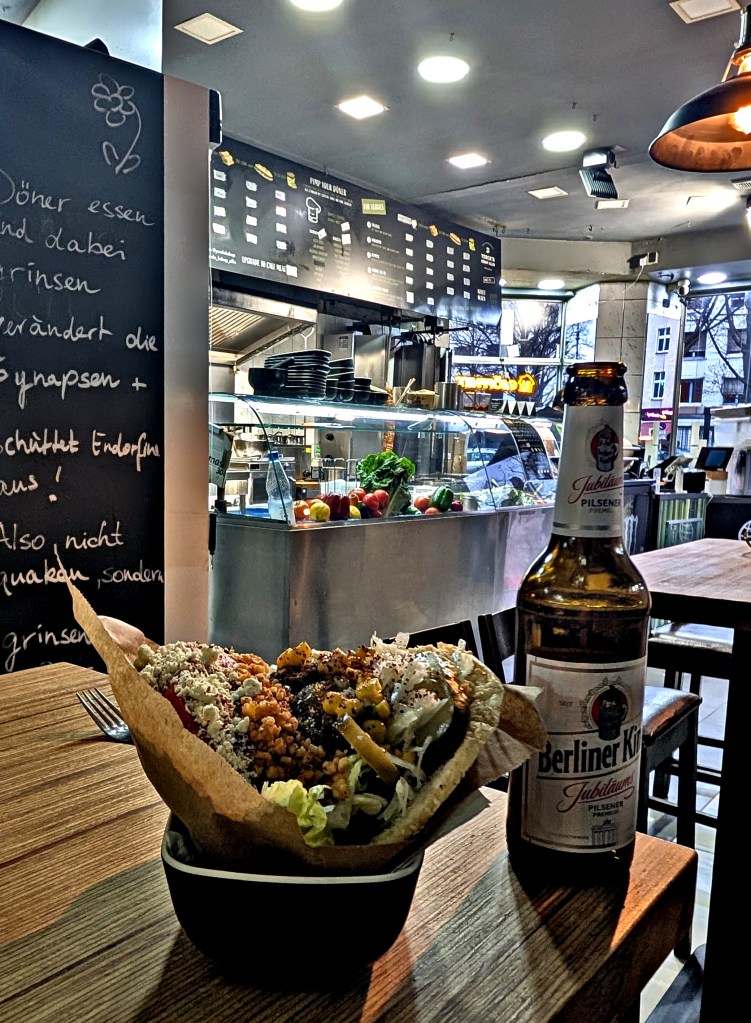
Doner Kabab
These venues are located all over Berlin. If you’re after delicious filling food then try yourself a Doner Kabab.
Final Thought
Berlin is a city that refuses to be just one thing. It’s a place where scars of the past sit right next to its future, reminding you that there is always room to reinvent yourself.
From the grit of the East Side Gallery to the quiet green of the Tiergarten, Berlin is loud, and it’s unapologetically itself. If you’re looking for a city that challenges you as much as it draws you in, put Berlin at the top of your list.
 theresafrogontheporch.com